Amid persistent military tensions, several sensitive issues in Russia are converging into a broader agenda affecting domestic resilience. Expectations of mobilization are sustaining high levels of public anxiety, while the fuel crisis is increasing socioeconomic pressure. Against this backdrop, the upcoming elections are becoming a key test of the Russian state’s ability to maintain social cohesion and public trust.
Mobilization Agenda Sustains a State of Permanent Readiness
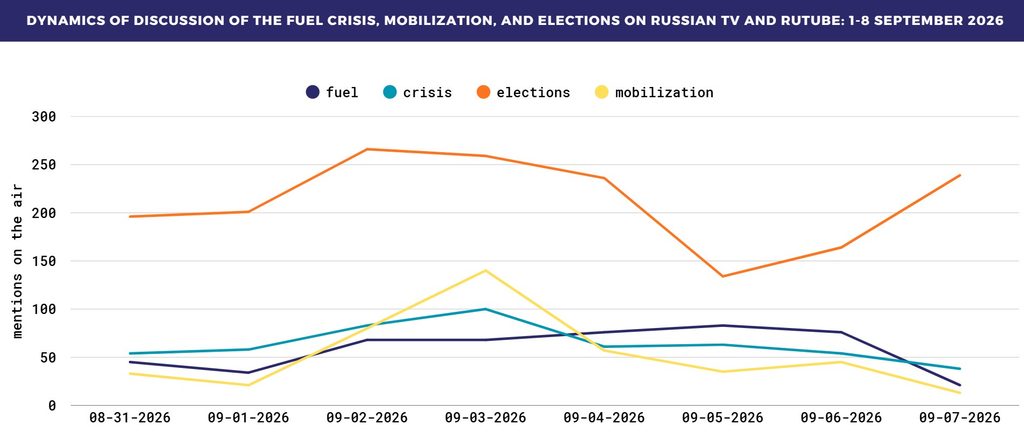
Mobilization remains a highly sensitive issue, despite the authorities’ consistent denials of the need for a new compulsory mass call-up. Instead, Russian propaganda is promoting a broader model of society’s permanent readiness for a prolonged confrontation through voluntary military service, support for the front, protection of infrastructure, and citizens’ personal involvement in ensuring security.
At the same time, the negative image of mobilization is projected onto Ukraine and NATO countries, with an emphasis on coercion, manpower shortages, and forced preparations for further escalation. Within Russia, by contrast, the emphasis is placed on voluntarism and social cohesion. As a result, formal mobilization is denied, while a broader state of societal mobilization is increasingly presented as the norm.
Fuel Crisis Increases the Risk of Social Discontent
Fuel shortages worsen growing social tensions and already affect many people’s daily lives. The authorities have sought to downplay the scale of the problem, portraying it as a temporary crisis that varies across regions. Along with Ukrainian strikes on refining facilities, they have attributed the shortages to maintenance work, seasonal demand, and logistical disruptions as major causes.
At the same time, the measures remain largely administrative. Moscow is managing fuel supplies directly by restricting exports, reallocating reserves across regions, importing fuel, and easing quality requirements for fuel produced by Russian refineries. Prolonged disruptions, however, pose a more serious risk. An everyday problem could turn into overt frustration with the authorities over high prices and limited fuel availability, making market stabilization not only an economic but also a political task.
Elections as a Test of Rule and Social Cohesion
Under these circumstances, the upcoming elections to Russia’s State Duma represent not merely another political process but also a test of domestic resilience. Aware of this, the Kremlin is actively promoting a narrative of external threats, emphasizing information attacks, cyber risks, and possible provocations. Such messaging may serve to mobilize the loyal electorate amid the risk of low turnout, while also providing a way to preemptively frame potential attempts to challenge the legitimacy of the election results.
Thus, against the backdrop of economic and military-political pressures, the Russian authorities are shaping the electoral agenda around promises of security and victory, economic prosperity, and a return to everyday normal. In practice, mounting military tensions are generating demands for greater cohesion, while economic problems are putting that cohesion to the test. The elections, in turn, are expected to demonstrate whether this resilience has been preserved.