The Institute for Conflict Studies and Analysis of Russia conducted a comprehensive analysis of relevant broadcasts on major Russian television channels and video platforms using the AI-powered tool War of Words and social media monitoring using the Osavul AI platform.
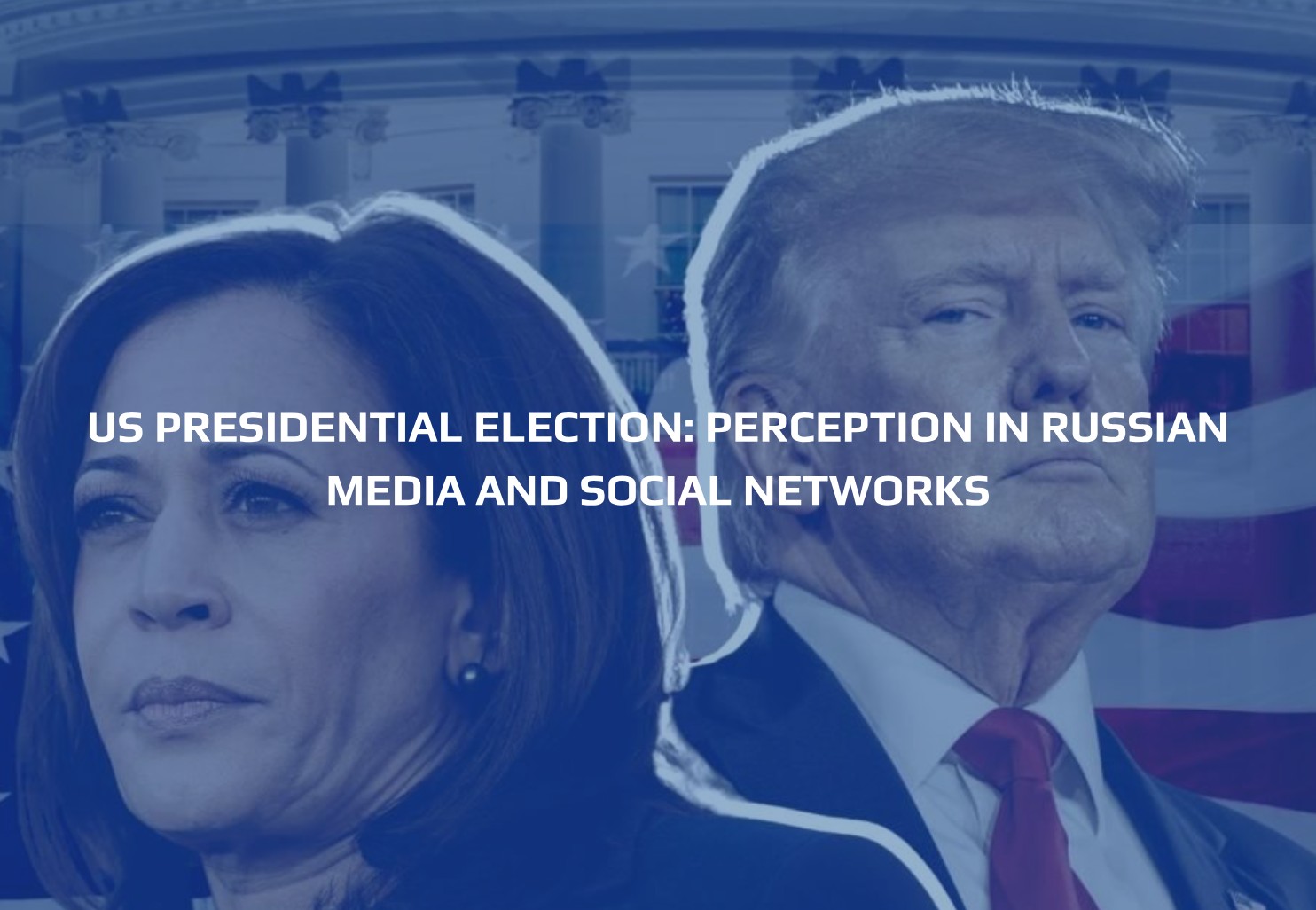
An analysis of social media discussions and view counts on relevant posts reveals that the issues capturing Russian interest in the context of the U.S. election include American support for Ukraine and Israel, presidential debates, and the assassination attempt on Donald Trump.
On Election Day and the following day, November 5 and 6, views of posts about the U.S. election in the Russian segment of Telegram reached nearly 212 million, with over 5.3 million reactions. A third of the posts (over 34%) were negative.
Analysis of Russian media coverage and Russian citizens’ discussions around the 2024 U.S. Presidential Election points to a consistent portrayal by Russian leadership of the U.S. as a primary threat. This strategy aims to consolidate public support around Russian state policies and to reinforce negative sentiments toward Western nations and U.S. allies.
In his regular statements, Vladimir Putin accuses the U.S. of attempting to dominate global politics, imposing a “neocolonial dictatorship,” and hindering economic growth in China and Russia, which sets the tone for discussions of the U.S. and the presidential election in particular.
At the same time, the decision by Joe Biden, the primary Democratic candidate, to withdraw from the race generated considerable interest, with related Telegram posts receiving over 51 million views. On average, since early 2024, President Biden ranked third among politicians by number of mentions in the Russian information space, following Vladimir Putin and Volodymyr Zelensky.
Another highly discussed topic was U.S. support for its allies, particularly Ukraine and Israel. In 2024, U.S. aid to both Israel and Ukraine increased significantly, sparking a negative reaction in some parts of Russian society. More than 40% of Telegram comments on U.S. support for Israel were critical, and recent discussions around support for Ukraine received 65 million views.
The presidential debates between Donald Trump and Joe Biden also resonated strongly in the Russian media. Relevant Telegram posts on debate day garnered 78 million views. Many Russian sources covering the topic conveyed negative attitudes toward U.S. policies, aligning with the general direction of Kremlin messaging.
The assassination attempt on Donald Trump during the U.S. presidential campaign generated a substantial response within the Russian information space. Telegram posts on the incident gathered over 230 million views in Russia on the day it occurred. Comments and discussions in Russian media showed heightened interest in the event, as it was perceived as a potential factor that could affect the election’s outcome.
The assassination attempt on Trump became another focal point for Kremlin rhetoric on U.S. instability and the challenges facing American leaders amid domestic political tensions.