INSTITUTE BRIEF

Independent research and analysis of Russia — its society, propaganda, and security challenges.

The Institute for Conflict Studies and Analysis of Russia (IKAR) is an independent, non-profit think tank providing policymakers, military experts, researchers, and journalists with insights on Russia and security challenges emerging from its policies. We conduct comprehensive, evidence-driven research on Russia — its internal processes, propaganda, and hybrid operations.

Latest Publications

Russians’ Perception of the Fuel Crisis: Early June 2026 Trends
Analytics

Russians’ Perception of the Fuel Crisis: Early June 2026 Trends

Executive Summary Monitoring of the Russian information space during 8–14 June 2026 indicates a gradual increase in the war’s impact on the everyday lives of Russian citizens. A key driver of this process has been the systematic targeting of Russia’s fuel, energy, and logistics infrastructure, resulting in localized and regional fuel shortages, mobility restrictions, transportation…

Election and Post Election Day in Armenia: Russian information influence and framing
Analytics

Election and Post Election Day in Armenia: Russian information influence and framing

Executive Summary On the day of Armenia’s parliamentary elections, debate focused on two core issues: the legitimacy of the government and the country’s sovereignty in shaping its future. Prime Minister Nikol Pashinyan and his government emphasized anti-corruption measures, efforts to prevent vote-buying, and tighter oversight of the electoral process. They also framed the election as…

Russian FIMI in the Armenian Elections
Analytics

Russian FIMI in the Armenian Elections

Overview of Recent Trends Ahead of Armenia’s parliamentary elections, the information environment surrounding the country shows signs of an intensifying and increasingly sophisticated Russian influence campaign. This campaign extends beyond traditional information and propaganda tools, encompassing a broader combination of media, economic, political, and institutional pressure. For Moscow, these elections are significant not only as…

Research

Briefings, public conversations, and closed-door roundtables.

See all research
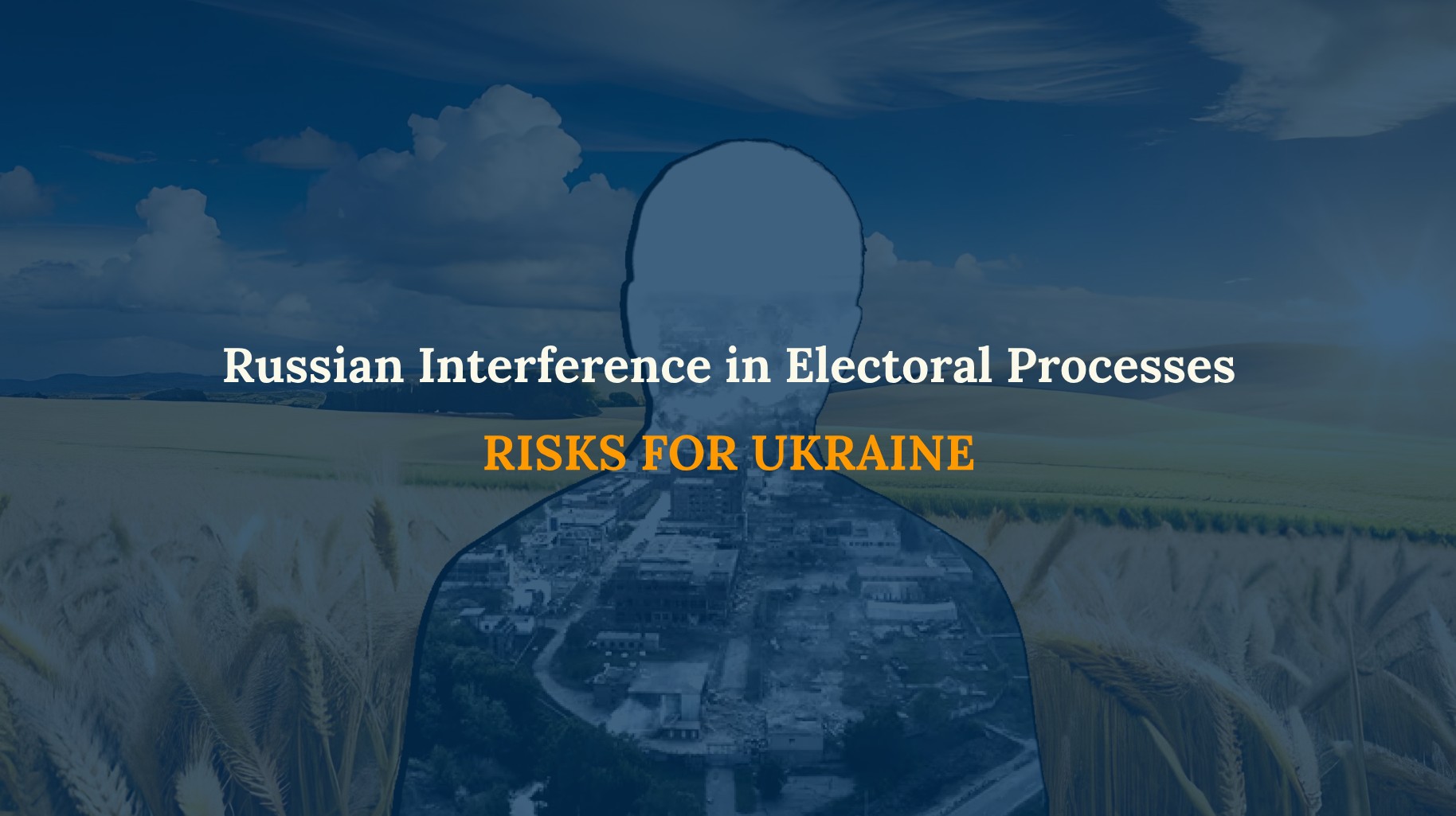
Russian Interference in Electoral Processes: Risks for Ukraine
Research

Russian Interference in Electoral Processes: Risks for Ukraine

Russia uses common and proven approaches in its attempts to influence electoral processes in other countries. Significant efforts are directed at Russian-speaking voters in these countries and at presenting the elections there to their own citizens in the light necessary for internal political stability within the Russian Federation itself. Our research aims to analyze the…

Russian Interference in Electoral Processes: Risks for Ukraine
Sociological survey: MIRROR OF RUSSIA, 9 wave
Research

Sociological survey: MIRROR OF RUSSIA, 9 wave

Russians are very sensitive to the acceleration of inflation and mostly do not feel the danger of an attack by NATO. The Institute for Conflict Studies and Analysis of Russia (IKAR) conducted a sociological study dedicated to the third anniversary of the full-scale invasion as part of the monitoring of Russian society called the “Mirror…

Sociological survey: MIRROR OF RUSSIA, 9 wave
Sociological survey: EXPECTATIONS OF RUSSIANS FOR THE NEW PRESIDENT
Research

Sociological survey: EXPECTATIONS OF RUSSIANS FOR THE NEW PRESIDENT

Russians believe that the elected president should first of all focus on solving the financial problems of the population. The Institute for Conflict Studies and Analysis of Russia (ICAR) conducted a sociological survey dedicated to the attitudes of Russians before the presidential elections. From January 20 to February 3, 2024, a study was conducted on…

Sociological survey: EXPECTATIONS OF RUSSIANS FOR THE NEW PRESIDENT

Analytics

Indicators, monitoring, and rapid-response analysis.

See all analytics
Russians’ Perception of the Fuel Crisis: Early June 2026 Trends
Analytics

Russians’ Perception of the Fuel Crisis: Early June 2026 Trends

Executive Summary Monitoring of the Russian information space during 8–14 June 2026 indicates a gradual increase in the war’s impact on the everyday lives of Russian citizens. A key driver of this process has been the systematic targeting of Russia’s fuel, energy, and logistics infrastructure, resulting in localized and regional fuel shortages, mobility restrictions, transportation…

Russians’ Perception of the Fuel Crisis: Early June 2026 Trends
Election and Post Election Day in Armenia: Russian information influence and framing
Analytics

Election and Post Election Day in Armenia: Russian information influence and framing

Executive Summary On the day of Armenia’s parliamentary elections, debate focused on two core issues: the legitimacy of the government and the country’s sovereignty in shaping its future. Prime Minister Nikol Pashinyan and his government emphasized anti-corruption measures, efforts to prevent vote-buying, and tighter oversight of the electoral process. They also framed the election as…

Election and Post Election Day in Armenia: Russian information influence and framing
Russian FIMI in the Armenian Elections
Analytics

Russian FIMI in the Armenian Elections

Overview of Recent Trends Ahead of Armenia’s parliamentary elections, the information environment surrounding the country shows signs of an intensifying and increasingly sophisticated Russian influence campaign. This campaign extends beyond traditional information and propaganda tools, encompassing a broader combination of media, economic, political, and institutional pressure. For Moscow, these elections are significant not only as…

Russian FIMI in the Armenian Elections