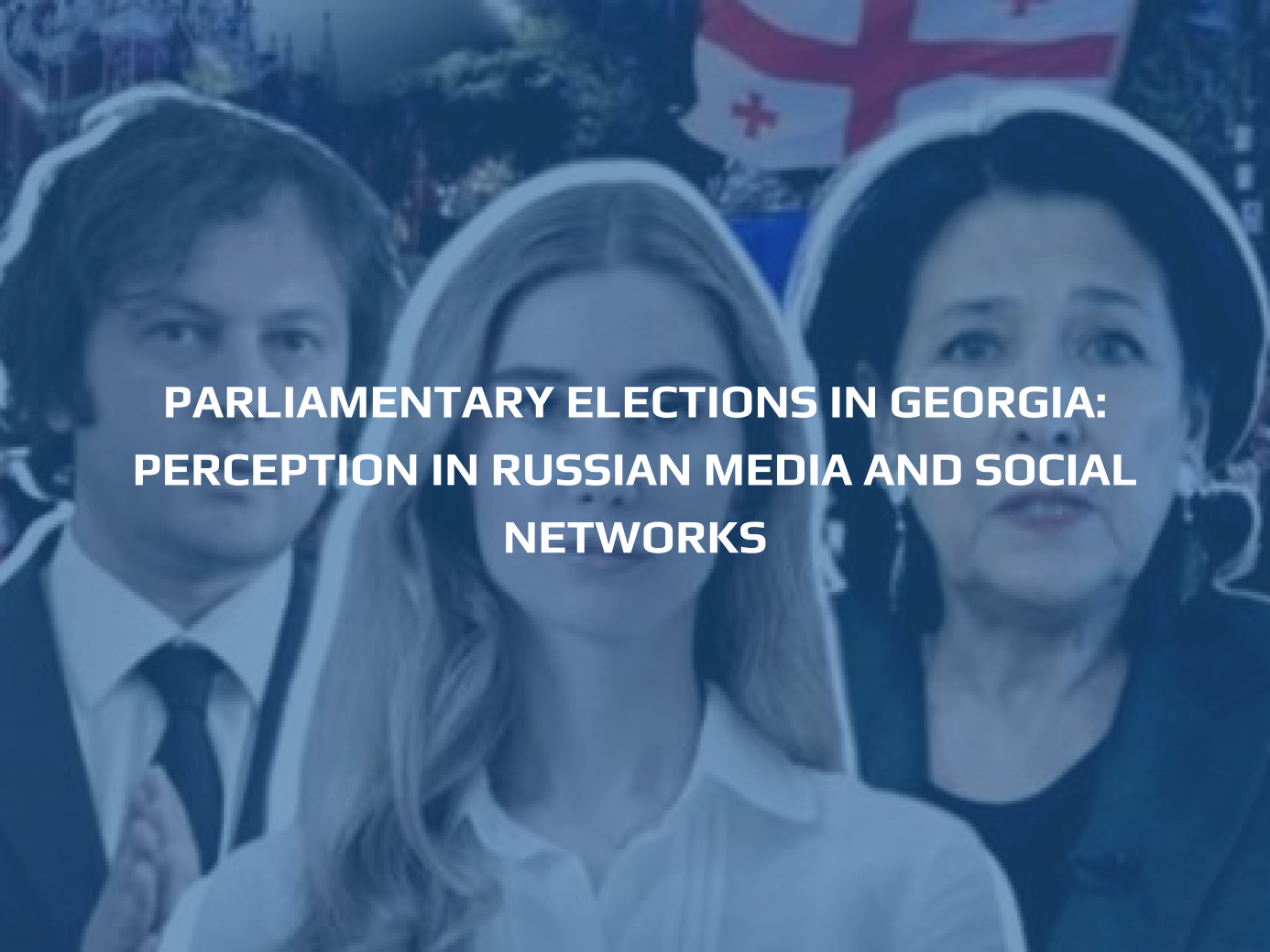
The election campaign in Georgia, which began on August 28, 2024, sparked lively discussions in Russian media focusing on the country’s geopolitical course and the ruling party’s “Georgian Dream” political agenda.
The Institute for Conflict Studies and Analysis of Russia conducted a detailed analysis of relevant messages on major Russian television channels and video platforms using the specialized AI-powered tool War of Words and examined social media using the Osavul AI platform.
The study revealed that discussions of the Georgian elections on Russian television frequently referenced the ruling party “Georgian Dream” and its associated Russian interests in the region. Moreover, Russian propaganda actively promoted the “Georgian Dream” on Telegram, where compromised sources accounted for 24% of all coverage on this topic.
There were indications of an aggressive information campaign against President Salome Zurabishvili, particularly following her refusal to sign the law banning “LGBT propaganda.” This caused significant resonance among the Russian Telegram audience, with relevant publications receiving around 3 million views and negative reactions to messages mentioning the president exceeding 40%.
The issue of occupied Georgian territories ‒ South Ossetia and Abkhazia ‒ was also prominently featured in the course of election campaign. The main narrative suggested an inevitable escalation of conflict should the Georgian opposition win.
In general, the topic of the war in Ukraine became one of the key elements of the election campaign. One should highlight Bidzina Ivanishvili’s statements regarding the inevitable confrontation between Georgia and the Russian Federation in case of victory of the opposition. This narrative was actively used on Russian television and the Telegram platform. The discussions reached their peak on September 26 when the “Georgian Dream” party used videos and photos of destroyed Ukrainian cities to compare the war in Ukraine and peaceful Georgian life.
Furthermore, the governmental legislative initiatives, such as the Law on Foreign Agents, triggered numerous protests in Georgia and led to Western sanctions. On September 20, 2024 when the United States announced sanctions against Bidzina Ivanishvili, views of relevant messages on Telegram exceeded 4 million. By October 9, the European Parliament passed a resolution urging sanctions against Georgia’s ruling party, resulting in 1.7 million views of related messages.
On October 26 and 27, 2024 ‒ the election day and votes counting ‒ there were published over 3,000 messages in Russian Telegram dedicated to Georgian elections, with more than 14 million views. Rate of negative reactions towards these posts reached nearly 50%, while compromised sources covering the elections accounted for over 25% of all messages, with a combined audience of 46 million readers.