Executive Summary
The parliamentary elections in Armenia, scheduled for June 7, 2026, are becoming another testing ground for Russia to apply its influence instruments previously deployed during the elections in Georgia and Moldova in 2024–2025.
The core elements of this strategy include the exploitation of fear of war, the promotion of frozen conflict narratives, particularly through manipulation of the trauma surrounding Karabakh, the amplification of Eurosceptic sentiment, targeted campaigns against the pro-European leadership, and the systematic undermining of trust in democratic institutions and electoral procedures.
Within the Armenian context, Russian actors have adapted these practices to local political and cultural specifics. The Armenian Apostolic Church, the influence of the diaspora, debates surrounding constitutional reform, and the narrative of the “surrender of Karabakh” play a particularly important role. These informational triggers allow the Kremlin to integrate anti-European and pro-Russian messaging into a discourse centered on the “protection of identity,” the “preservation of statehood,” and the “prevention of a new war.”
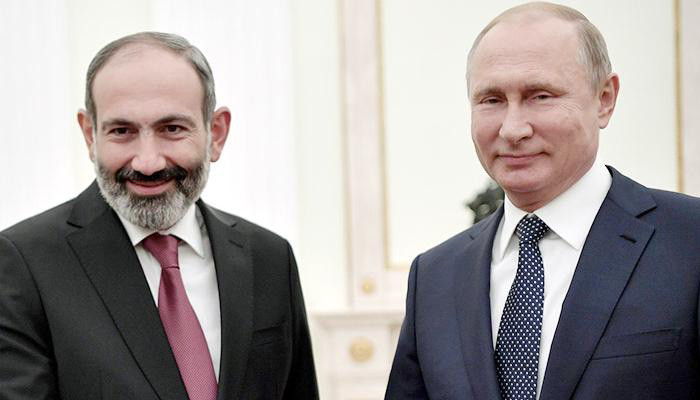
Since the beginning of 2026, the information agenda surrounding Armenia has been largely structured by three foreign policy events: the contacts between Vladimir Putin and Nikol Pashinyan on April 1, the visit of U.S. Vice President J.D. Vance to Yerevan on February 9–10, and the Armenia–EU summit on May 4–5. The latter not only reflects Yerevan’s prioritization of engagement with the European Political Community but also includes bilateral meetings on the sidelines of the summit, including contacts between Nikol Pashinyan and Volodymyr Zelenskyy.
These events form the primary interpretive framework for the upcoming elections within the pro-Russian and opposition media sphere. The meeting with Putin is portrayed as an indicator of whether Armenia retains or loses room for maneuver in relations with Moscow; the visit of the American envoy is framed as evidence of deeper U.S. involvement in Armenia’s domestic agenda; while the EU summit is presented as both a symbol of the institutionalization of the Western course and confirmation of external support for the current authorities ahead of the elections.
Separately, the Kremlin reacted particularly sensitively to the heightened attention given at the Yerevan summit to the figure of Volodymyr Zelenskyy, who made another set of sharp statements regarding Moscow and its unwillingness to end the war. What matters is not what he said, but where it happened — on the territory of a formal ally of Russia within the political, economic, and military organizations it has created.
Taken together, these developments function as media markers of Armenia’s geopolitical choice and are used by various actors to advance often directly opposing interpretations, ranging from claims about Armenia’s “final turn toward the West” to narratives framing the moment as the “last chance to preserve balance.”
An analysis of Russian-language television programs, Telegram channels, and statements by pro-Russian commentators on Armenian issues demonstrates a consistent communication pattern. In particular, Nikol Pashinyan, Armenia’s current prime minister, is portrayed as a symbol of a “colonial Western course” and a promoter of a “Turkish-Azerbaijani agenda.” At the same time, European integration is associated with threats of cultural degradation, economic instability, and the prospect of a new cycle of military escalation.
In addition, as in the case of Russia’s attempts to influence the parliamentary elections in Georgia and the presidential and parliamentary elections in Moldova, narratives about the “Ukrainian scenario” are being promoted. This involves equating pro-European policy (and, consequently, an anti-Russian stance) with the intention of the current authorities to initiate a war with Russia and to bring about massive destruction and casualties.
Meanwhile, any attempts by the European Union to support the electoral process are interpreted as the implementation of a “Moldovan scenario” of external interference, contrasted with Russia, which is portrayed as the guarantor of security, economic prosperity, and the preservation of traditional values. Pro-Russian political forces within Armenia are, in turn, positioned as the only actors capable of preventing war, preserving Armenian national identity, and restoring allied relations with Moscow.
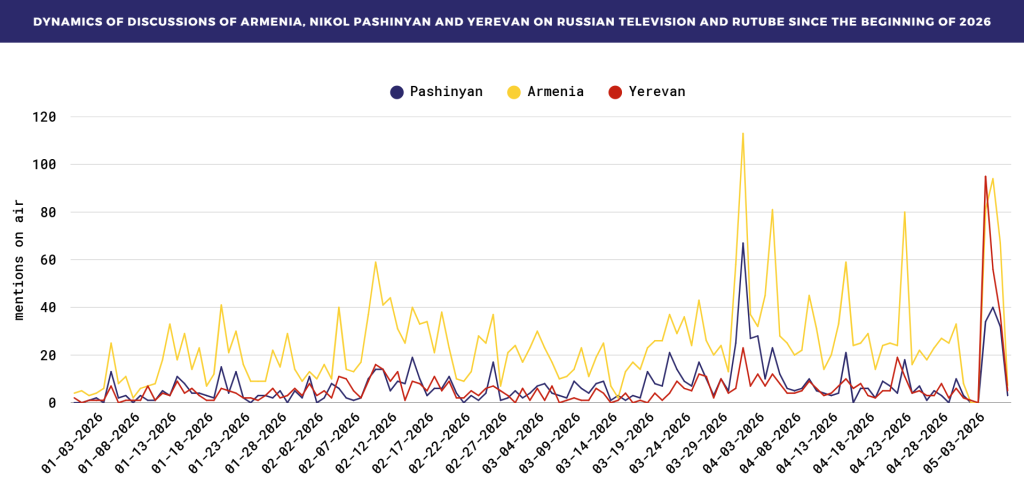
In addition, Russian propaganda discourse shows a tendency (chart above) in which the Kremlin uses the terms “Armenia” and “Yerevan” in the context of direct political accusations. “Yerevan” is used in a manner analogous to the term “Kyiv regime,” particularly during and after the EU summit. “Armenia,” in turn, is used as a more general reference aimed at the pro-Russian electorate, especially in the context of coverage of meetings with Putin.
As a result, a significant risk is emerging that, regardless of the outcome of the vote, the elections may become the target of external informational pressure and delegitimization campaigns, while Armenia’s domestic political course will remain an object of ongoing geopolitical confrontation.
Introduction
The parliamentary elections in Armenia, scheduled for June 7, 2026, are taking place amid a profound reassessment of the country’s foreign policy trajectory, the conclusion of the Karabakh phase of the conflict, and the gradual deepening of partnership with the European Union. Against this backdrop, a combination of indicators points to the deployment by Russia of a multilayered influence campaign combining informational-propaganda, political, and potentially cyber instruments.
The experience of electoral campaigns in Moldova and Georgia in 2024–2025 demonstrates the existence of a relatively standardized set of mechanisms used by the Kremlin to contain or distort pro-European development trajectories. These include the exploitation of fear of war, manipulation of frozen conflict narratives, the systematic amplification of Eurosceptic sentiments, personalized campaigns against pro-European leaders, and the undermining of trust in the electoral process as an institution.
An analysis of Russian-language television reports, Telegram channels, and public statements by commentators working on Armenian issues indicates that a similar toolkit is already being actively adapted to the Armenian context, taking into account the trauma of Karabakh, the role of the diaspora, and the influence of the Armenian Apostolic Church.
Structure and Instruments of the Russian Influence Campaign
Exploitation of Fear of War and Manipulation of Conflicts
In Moldova and Georgia, the Russian information strategy systematically used fear of a new war as an argument against European integration. Transnistria and Georgia’s occupied territories were presented either as a potential casus belli in the event of a “wrong” foreign policy choice or as a possible “reward” for returning to a pro-Russian course.
The Armenian case demonstrates the adaptation of this model to local specifics. In some analytical programs and discussion formats, the continued rule of Nikol Pashinyan is directly associated with the risk of a new military conflict. The elections are framed as a choice between war and peace, yet the logic of this dichotomy is inverted: “peace” is associated with a return to a pro-Russian orientation, while European integration and the current political course are portrayed as a path toward inevitable escalation and the threat of losing statehood.
Additionally, the information space actively exploits the issue of Armenia’s “unused” military capabilities during the 2020 conflict. Such narratives create the perception of the current leadership’s “treacherous restraint” and contrast it with a model of harsher and more forceful behavior, often through references to the Iranian approach.
As a result, a mobilizational narrative is formed in which:
- the pro-European course is associated with the risk of a new war and the final loss of sovereignty;
- revision of foreign policy and a tougher security strategy are presented as the only means of preserving the state.
Euroscepticism and the Image of the “Colonial West”
In Moldova and Georgia, Russian propaganda consistently promoted the thesis that European integration brings no real economic benefits and instead leads to increased dependency, poverty, and demographic decline.
A similar construction can be observed in the Armenian media sphere, targeting both domestic and Russian-speaking audiences. The Armenia–EU summit and European initiatives aimed at countering hybrid threats are interpreted as attempts to interfere in the country’s internal affairs according to a “Moldovan scenario.” EU support is described not as an institutional partnership but as a mechanism of external political control.
EU economic assistance and investment programs are portrayed as instruments of political influence, while their practical value for the population is systematically questioned. In contrast, an alternative model associated with the “traditional” post-Soviet space is offered, emphasizing cheap energy resources, predictable business conditions, and the preservation of familiar economic ties.
Particular importance in the Armenian case is attached to the identity dimension. Unlike Moldova and Georgia, Eurosceptic rhetoric here is closely linked to discussions surrounding constitutional reform. Changes concerning the Declaration of Independence, the role of the diaspora, and certain family-related provisions are interpreted as attempts to undermine the historical and cultural foundations of Armenian statehood.
Thus, economic Euroscepticism is supplemented by a more emotionally charged framework in which European integration is portrayed not only as politically disadvantageous but also as a threat to Armenian identity itself.
Cultural Polarization and the Theme of “Traditional Values”
During Georgia’s 2024 parliamentary campaign, the topic of LGBT issues and “traditional values” became one of the central elements of Russia’s information strategy. European integration was systematically associated with the imposition of alien cultural models and the destruction of traditional society.
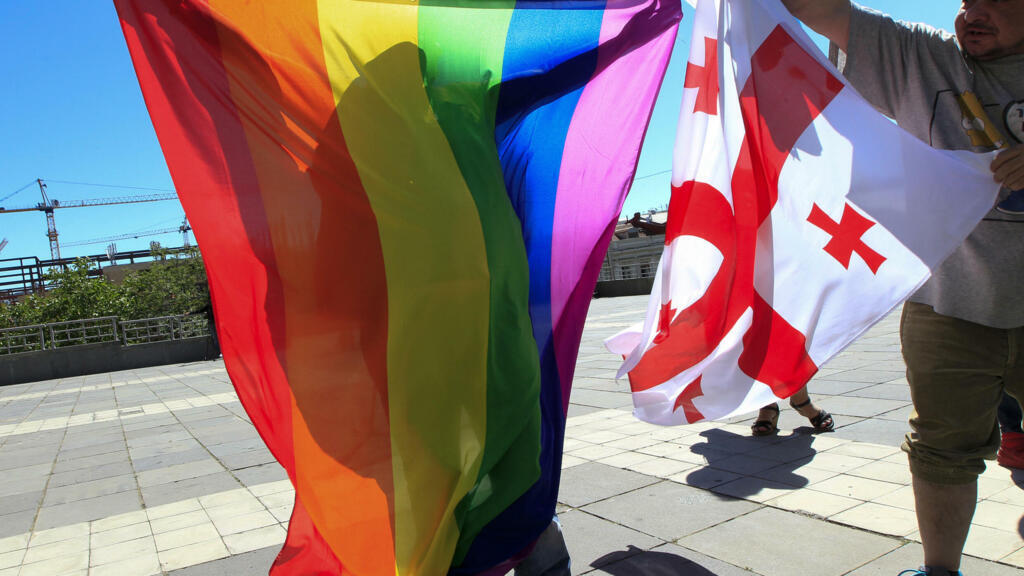
In Armenia, political and media actors have adapted this instrument through discussions on constitutional amendments, the role of the family, and the status of the Armenian Apostolic Church. Changes to provisions concerning family rights, the role of the diaspora, and certain social norms are presented as attempts to dismantle the traditional social order and weaken ties between Armenia, the diaspora, and the Church.
Simultaneously, narratives about “pressure on the Church” and a “war against Christian identity” are intensifying, with individual criminal cases or political disputes interpreted as part of a broader “Western program” aimed at dismantling the spiritual foundations of Armenian society.
As a result, the equation “EU = cultural degradation,” previously actively used in the Georgian context, acquires in Armenia a more localized and emotionally sensitive form through appeals to religion, memory, and national identity.
Targeting Leaders and Delegitimizing Democratic Procedures
Personalized Campaigns Against the Pro-European Leadership
During electoral campaigns in Moldova and Georgia, Russian media and affiliated Telegram channels focused less on promoting alternative candidates and more on systematically discrediting pro-European leaders. The primary objective was to construct a stable negative image of the authorities as “externally controlled,” “anti-national,” and “detached from society.”
In Moldova, Maia Sandu became the central target of such campaigns, with Russian media linking her to “repression against the opposition,” “external governance,” and “loss of sovereignty.” In Georgia, similar mechanisms were used against Salome Zourabichvili, especially after she conflicted with the conservative segment of the political spectrum over legislation concerning “LGBT propaganda.”

In the Armenian context, a similar role is assigned to Nikol Pashinyan. Within the analyzed media space, he is systematically portrayed as a politician connected to the interests of Ankara and Baku, responsible for the destruction of the previous security architecture and the loss of Karabakh. Constitutional reforms and the government’s foreign policy course are interpreted as elements of a project allegedly designed outside Armenia.
Particular emphasis is placed on emotionally charged episodes intended to reinforce Pashinyan’s personal delegitimization. Such narratives are used to construct an image of a government in conflict with “ordinary citizens,” veterans, refugees, and carriers of national memory.
At the same time, pro-Russian experts and former officials consistently link the Armenian leadership’s anti-Russian rhetoric to its alleged “dependence on the West,” shaping an image of authorities willing to sacrifice security concerns in exchange for political support from the EU and the United States.
The objective of these campaigns is not only to mobilize supporters of specific pro-Russian figures but, above all, to maximize the toxicity of the pro-European political center itself and demoralize its electoral base.
Undermining Trust in Elections as an Institution
During elections in Moldova and Georgia, Russia’s information infrastructure actively promoted narratives about inevitable fraud, foreign interference, and predetermined election outcomes even before voting day. Such messages spread through Telegram channels, political talk shows, and affiliated media, shaping public perceptions of the electoral process as illegitimate regardless of the final results.
A similar framework is gradually being constructed around the Armenian elections. Public statements by pro-Russian commentators regularly claim that the current authorities are allegedly incapable of remaining in power without large-scale electoral fraud. At the same time, references to the “Moldovan scenario” are actively used, according to which the EU supposedly ensures the victory of loyal political forces through monitoring mechanisms and anti-hybrid threat initiatives.
Additional tension is generated by the official rhetoric of Russian institutions, portraying European missions as interference in Armenia’s internal affairs. As a result, a competing system of accusations is emerging in which each side preemptively questions the neutrality of external actors.
The risks associated with this dynamic are twofold:
- in the event of a pro-European victory, Russian information networks may launch a campaign to delegitimize the election results;
- simultaneously, narratives about “European interference” may serve as a universal mechanism for contesting any political outcome inconsistent with Moscow’s expectations.
This creates conditions for prolonged political turbulence and a broader erosion of trust in electoral institutions.
Channels and Actors of Influence
An analysis of television broadcasts, Telegram channels, and public statements allows several main groups of actors involved in shaping the pro-Russian information agenda around the Armenian elections to be identified.
- Russian Federal Media and Political Talk Shows
Russian federal television channels and discussion programs form the basic interpretive framework in which the Armenian leadership is described as pursuing an “anti-Russian” and “externally controlled” course. These platforms actively promote narratives about a “Moldovan scenario,” the threat of external governance, and the risks of breaking allied relations.
- The Pro-Russian Telegram Ecosystem
War correspondents, “Z”-channels, and specialized Caucasus-focused resources ensure the rapid dissemination of emotionally charged messages related to the Armenia–EU summit, Vladimir Zelensky’s speech at this event, constitutional reform, relations with the Church, and the Karabakh issue. Telegram functions here as a mechanism for accelerating and radicalizing narratives.
- Armenian Opposition Platforms in the Russian-Speaking Segment
A separate role is played by Armenian media and political platforms oriented toward Russian-speaking audiences. Through them, the positions of local opposition politicians, Church representatives, and former state officials are articulated, often in coordination with Russian experts and media structures.
- Diaspora Structures in Russia
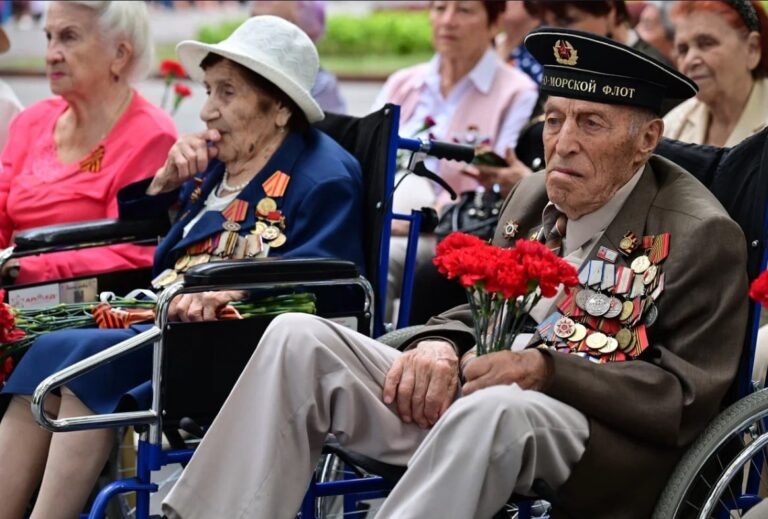
Organizations representing the Armenian diaspora in Russia provide additional influence infrastructure through public events, forums, expert discussions, and statements regarding the future of Armenian-Russian relations. These structures serve as important channels for political mobilization and the dissemination of pro-Russian interpretations among segments of the Armenian audience.
Taken together, these elements form a multilayered media environment in which audiences inside Armenia and the Armenian diaspora in Russia are systematically exposed to synchronized narratives embedded within the Kremlin’s broader strategy across the post-Soviet space.
Risk Assessment and Possible Scenarios
- Electoral Polarization Along the “EU vs Russia” Axis
One of the key risks is the reduction of the entire pre-election agenda to the geopolitical dichotomy of “the West or Russia.” Under such conditions, issues of socio-economic reform, institutional development, and domestic policy recede into the background, replaced by emotionally charged foreign policy choices.
Such polarization significantly increases societal vulnerability to external informational influence, as fear of war, economic crisis, or cultural degradation becomes an effective instrument of political mobilization.
- Delegitimization of the European Integration Course
Growing Euroscepticism, fueled by narratives about the “colonial West” and external governance, may gradually reduce public support for closer integration with the EU, even if the course itself is institutionally preserved.
A distinctive feature of the Armenian context is that criticism of European integration is reinforced not only by economic arguments but also through appeals to identity, religion, and historical memory. This makes such narratives considerably more emotionally resilient.
- Undermining Trust in Elections and Institutional Erosion
The systematic dissemination of narratives about electoral fraud, foreign interference, and “predetermined” outcomes undermines public trust in elections as a mechanism for political competition and transfer of power.
In the event of a disputed result, for example, a narrow margin between blocs or difficult coalition negotiations, such an information environment may provoke a prolonged political crisis, mass protests, and street mobilization scenarios similar to post-election developments in Georgia and Moldova.
- Increased Foreign Policy Vulnerability
Armenia finds itself under dual pressure. On the one hand, public distrust toward Russia persists against the backdrop of events surrounding Karabakh and the crisis of existing security mechanisms. On the other hand, narratives portraying the Western course as “colonial” and externally imposed continue to intensify.
As a result, any attempt to balance between competing foreign policy centers risks being perceived as insufficiently consistent both domestically and by external actors.
This increases the likelihood that Armenia will become firmly established as one of the key nodes in the geopolitical confrontation between Russia and the West, where democratic procedures and electoral processes are viewed primarily through the prism of geopolitical competition.
Conclusions
An analysis of Russian-language television broadcasts, Telegram channels, and Armenian opposition media, compared with practices documented during elections in Moldova and Georgia, indicates the formation of a comprehensive influence campaign targeting Armenia based on already tested mechanisms.
The key elements of this campaign include:
- exploitation of fear of war and manipulation of the Karabakh legacy;
- strengthening Eurosceptic sentiment through narratives about “colonial dependency,” cultural degradation, and loss of identity;
- systematic personal discrediting of Nikol Pashinyan as the symbol of the pro-European course;
- undermining trust in electoral procedures through narratives about foreign interference, a “Moldovan scenario,” and pre-arranged electoral fraud.
The combination of these factors creates significant risks both for the resilience of Armenia’s electoral process and for the stability of its foreign policy course after the elections.
Under these conditions, particular importance is attached to:
- systematic monitoring of information operations;
- transparent and consistent public communication by state and independent institutions;
- the development of mechanisms to counter disinformation;
- engagement with the most vulnerable audiences, including the Russian-speaking segment and the Armenian diaspora.
Ultimately, the ability of Armenian institutions to preserve trust in procedures, reduce political polarization, and ensure the resilience of the information environment will largely determine the character of the post-election dynamic and the degree of external influence over the country’s internal political processes.