From “Shadow” to “State”: The True Nature of Russia’s Maritime Sanctions Evasion System
The IKAR investigation series sequel demonstrates that the “shadow fleet” is not an incidental or unintended byproduct of sanctions policy. Rather, it constitutes a deliberate, integrated element of Russia’s state economic and security strategy. Its operations systematically undermine the effectiveness of the international sanctions regime and give rise to a new type of hybrid threat, blending economic, logistical, and military means of influence.
The fleet operates as part of a broader, centrally coordinated sanctions evasion model. This model includes complex chains of vessel re-registration, manipulation of identification systems (AIS), and the use of multi-layered corporate and financial structures. Such coherence indicates the presence of a unified coordination center rather than fragmented commercial practices.
Key Takeaways:
- The “shadow fleet” emerges as a comprehensive instrument of state policy, combining economic gain with security objectives, undermining established international norms, and generating long-term risks to global stability.
- Collected evidence points to the direct involvement of key state institutions in coordinating this system, including the Presidential Administration of the Russian Federation, security services, and the leadership of state-owned energy and transport companies. This confirms the integration of the “shadow fleet” into the broader architecture of Russia’s wartime economy.
- A distinct role in sustaining the system is played by the Russian Maritime Register of Shipping (RMRS), which effectively acts as an operator: certifying vessels, providing technical oversight, and formally legitimizing the activities of the sanctioned fleet. Its presence within international frameworks creates an additional “grey zone of legitimacy,” complicating the enforcement of sanctions mechanisms.
- The activities of RMRS and affiliated structures extend beyond Russia through a network of representative offices in third countries, particularly in Asia and the post-Soviet space. This geographic diversification enables integration into local markets, circumvention of restrictions, and exploitation of institutional gaps across jurisdictions.
- At the same time, financial support for operations is provided through a network of companies registered in international financial hubs, maintaining ties with Russian banks and servicing transactions related to sanctioned oil shipments. As a result, an alternative payment infrastructure has emerged, operating outside the oversight of Western regulators.
- From a logistical perspective, the core of the system consists of state tanker operators managing large-capacity vessels, rotating flags and jurisdictions to minimize sanctions risks. Smaller tankers, in turn, handle regional logistics and ship-to-ship transfer operations, which are critical for concealing the origin of oil. The high level of state involvement in these processes indicates a direct link between the export of sanctioned commodities and the Kremlin’s strategic interests.
- The system also involves major business groups and oligarchic structures integrated through complex international holding arrangements. The combination of state and private resources enhances the resilience of this model and complicates its disruption through sanctions pressure.
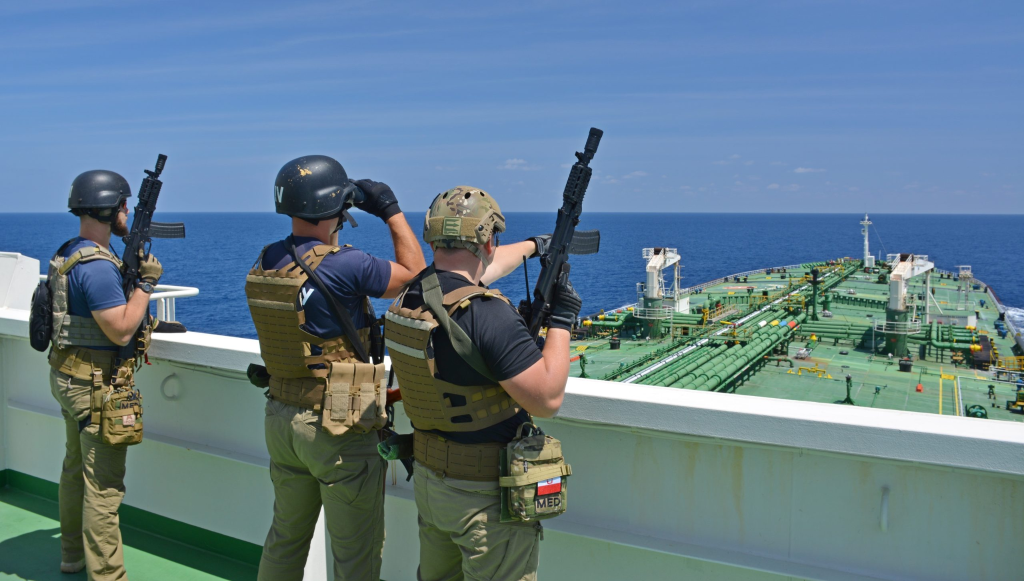
- Crew formation is carried out through formally legal recruitment agencies; however, control over this process is exercised by structures linked to security services. On certain vessels, individuals without proper maritime qualifications—but with military or security backgrounds—have been identified, suggesting that the fleet may be used not only for economic purposes but also for intelligence or sabotage-related tasks.
INTRODUCTION
The so-called “shadow fleet” should not be understood as an emergent grey-market phenomenon. It is better described as a structured instrument of state policy. Its defining characteristic is not concealment alone, but the deliberate construction of transaction chains that allow sanctioned Russian crude and petroleum products to move outside established financial and regulatory controls. These flows are engineered with intent. Vessels are systematically reflagged, renamed, and reassigned layered or synthetic identities, while AIS transmission patterns are selectively manipulated. At the same time, certification and insurance are routed through opaque or permissive jurisdictions, reducing exposure to enforcement mechanisms.
Operationally, the shadow fleet functions in close alignment with state objectives. It reflects strategic direction rather than opportunistic behavior. The system is supported by a network of intermediaries, including shipping operators, financial conduits, and jurisdictional safe havens that exhibit either loyalty or dependency. This configuration enables continuity of exports under sanctions pressure while diffusing legal and financial accountability across multiple layers.
This structure explains the growing limitations of conventional sanctions and compliance frameworks. Measures designed to regulate commercial market actors are less effective when applied to a system that behaves as a state-directed logistics network, optimized to exploit regulatory asymmetries. What appears externally as a fragmented and informal market is, in practice, a coordinated mechanism of wartime economic policy. Its persistence raises broader questions about enforcement capacity, maritime domain awareness, and the credibility of rules-based governance among the United States, the European Union, and other stakeholders.
GOVERNANCE AND INSTITUTIONAL STRUCTURE
Management of the shadow fleet is carried out in collaboration with authorized representatives of the Presidential Administration of Russia, senior officers of the Federal Security Service responsible for the transport and oil sectors, and top managers and beneficiaries of major Russian oil, gas, and transport conglomerates.
A central structure in this system is the Russian Maritime Register of Shipping (RMRS). Russia has not concealed full state control over RMRS, which operates as a federal institution subordinate to the Ministry of Transport. Unlike traditional classification societies, which function on a commercial basis and rely on customary legal immunities in liability cases, RMRS has an explicitly public-law status. In practice, this status appears to be accompanied by attempts to invoke state immunity on its behalf.
RMRS openly participates in the Working Party on the Transport of Dangerous Goods, the Committee on the Safety of Inland Water Transport of Dangerous Goods, and other convention-based bodies operating under the auspices of the United Nations Economic Commission for Europe (UNECE), particularly within the framework of the European Agreement concerning the International Carriage of Dangerous Goods by Inland Waterways (ADN). The Administrative Committee of this agreement previously included RMRS on a limited list of recommended classification societies for dangerous goods. RMRS continues to rely actively on this recommendation, while UNECE materials still refer to its alleged “recognition” by Danube states, including Austria, Romania, Hungary, and Moldova.
Through the same Administrative Committee, Russian representatives also secured a recommendation for another Russian classification body, the Russian Classification Society, formerly known as the Russian River Register. For a long period, this entity played a relatively minor role within the navigation safety system. It was reportedly used as an intermediary in operations where it was deemed undesirable to expose RMRS directly. At present, however, the functional roles of the two classification societies have increasingly converged, notwithstanding differences in personnel and formal areas of activity.
In 2023, the sanctioned RMRS issued new Rules for Surveys of Inland Navigation Vessels in Service for European Inland Waterways (2-020101-066-E), evidently intended to meet the ongoing demand for its services within this sector.
RMRS officially employs more than 400 personnel and maintains a broad territorial structure across areas under Russian control. It also operates in occupied Crimea, specifically in Kerch and Sevastopol, through a “closed joint-stock company” known as “Morskoy Registr Sudokhodstva.”
In addition to its branches and representative offices, RMRS has established subsidiaries, including LLC “Marine Engineering and Consulting Center,” headed by Vasyl Ikonnikov; LLC “RS – Marine Warranty Survey,” headed by Igor Abrosimov; and LLC “Engineering and Expert Center,” headed by Yegor Serzhantov. These entities primarily provide documentary and technical support for RMRS, including the development and issuance of its extensive technical rules and regulations.
RMRS structures are used to service key enterprises of the Russian military-industrial complex, including shipyards such as Yantar Shipyard, Vympel Shipyard, and Admiralty Shipyards, as well as the nuclear icebreaker operator Rosatomflot.
RMRS also supervises a number of Russian tanker fleet operators. For example, the Rostov-based company “Konaro Shipping” (registry number 68318) operates the sanctioned tanker Bavly (IMO 9621560), which is itself supervised by RMRS (registry number 111665). Similarly, RMRS supervises “Gazpromneft Shipping” of St. Petersburg (registry number 22695), which was added to Ukrainian sanctions lists in the summer of 2025. Its sanctioned tanker, Gazpromneft Zuid East (IMO 9537109), listed in RMRS registers under the name “Orenburg” (registry number 081031), provides another example of RMRS’s systemic role in servicing the Russian tanker fleet. These cases illustrate an established and ongoing practice rather than isolated instances.
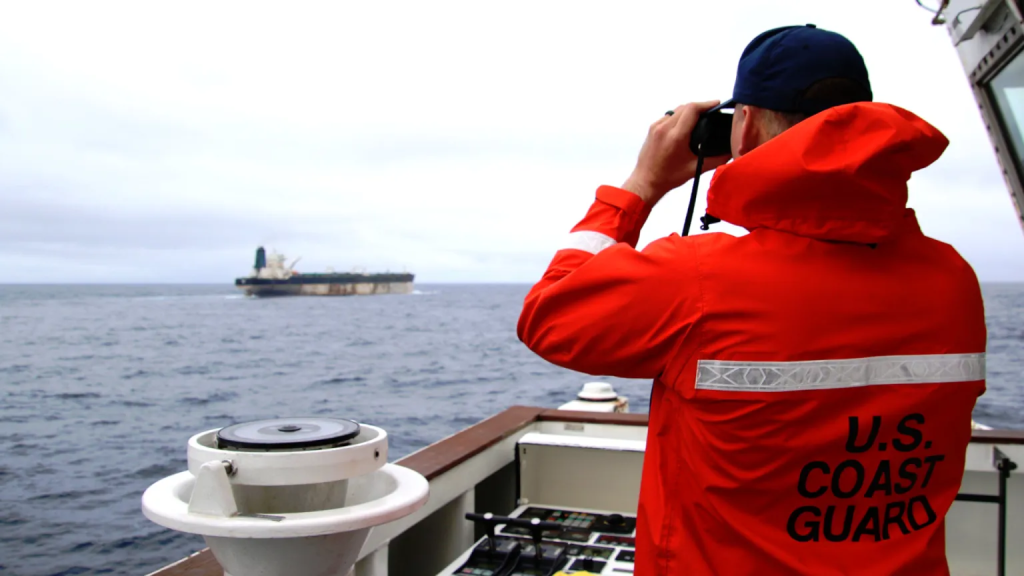
US Coast Guard
INTERNATIONAL STRUCTURES AND CORPORATE NETWORKS
Most managers of foreign RMRS structures are Russian nationals with limited publicly available biographical information, although there are notable exceptions.
In Baku, RMRS operates through LLC “Maritime Register of Shipping,” headed by Guliyev Shaban Adil oglu, who has worked within the Russian Maritime Register of Shipping (RMRS) since 1993 and has led the local LLC since 2008. In Azerbaijan, RMRS also maintains separate units at two key ship repair plants of the state-owned Azerbaijan Caspian Shipping Company, “Bibiheybat” and “Zykh”, and Guliyev is regularly present at company events.
It is highly likely that his brother, Guliyev Igbal Adil oglu, is a long-standing Moscow-based functionary linked to Russian special services on Azerbaijani matters. He is identified as president of the local “Center for Cross-Cultural Communications” and as an expert affiliated with the State Duma, the Russian International Affairs Council, the Russian Gas Society, and the Kremlin’s Valdai Discussion Club.
The head of the RMRS structure at the “Bibiheybat” plant, Manafov Bakhtiyar Sarkhak oglu, shares a name with a former officer who worked for 17 years in the Special State Protection Service of Azerbaijan, the body responsible for the protection of Azerbaijan’s supreme state institutions and officials.
In Kazakhstan, the RMRS structure is headed by Ali Akhmetkaliyev, a graduate of Saint Petersburg State Marine Technical University. In Batumi, the Georgian LLC “Marine Register of Shipping in Georgia” is headed by Levan Sardzhveladze, whose public biography is likewise limited. These cases represent exceptions; in most other foreign RMRS branches, Russian nationals are formally listed as managers.
One example is Muscovite Igor Zakharov, head of the RMRS subsidiary in Turkmenistan since 2020. Between 2001 and 2004, this former functionary of the Soviet Ministry of Defense worked at LLC “Anship” and “Anroskrim,” registered in Temryuk, then at the Federal Agency for Sea and River Transport. He later held a position at “Blexia Ferry and Investments,” affiliated with Russian Railways, which had contracts with the Russian Ministry of Defense to transport equipment to occupied Crimea and the Kaliningrad Oblast. From October 2017 to April 2018, Zakharov served as the so-called “Minister of Transport” in occupied Crimea and has been under Ukrainian sanctions since 2018.
In China, RMRS maintains a representative office in Hong Kong, a representative office in Tianjin, a Shanghai branch opened in 2014, and an LLC “RMRS (Tianjin).” In 2023, its local head, Petr Vanyukov, stated that RMRS services covered more than 400 Chinese enterprises, including nearly 20 service providers, 8 shipbuilding yards, and 10 repair plants, adding that 45 percent of RMRS staff in the region were citizens of the People’s Republic of China. In July 2024, RMRS reported a “successful inspection” of its Chinese subdivision by the Maritime Administration of the PRC.
In 2025, RMRS announced certifications of several Chinese industrial facilities, including “Changzhou Zhonghai Marine Propeller,” producing propellers for the PRC fleet; “Qidong Qianhai Heavy Industry,” building vessels, drilling rigs, and offshore platforms; “Deyang Rongfa Energy & Equipment,” manufacturing steel ship components; the shipyards “Shandong Julong Intel-Tech” and “Zhenjiang Huigang Machinery Equipment,” which builds ice-class tugs; as well as engines from “Zichai Machines.”
In early November 2025, Vanyukov, his Chinese deputy and de facto overseer Cao Huimin, and RMRS Deputy Head Andrey Fasolko, who had formerly worked for RMRS in Singapore and Korea, were observed at a working meeting of foreign classification societies in Nantong, China.
COMMERCIAL OPERATORS AND OLIGARCHIC LINKS
Recruitment and employment on vessels of the Russian “shadow” and “ghost” fleet formally follow the same procedures applied to other vessels controlled by Russian shipowners. The principal nominal actors are Russian crewing agencies, which present their operations as compliant with international maritime labor standards, primarily the Maritime Labour Convention (MLC) and the International Convention on Standards of Training, Certification and Watchkeeping for Seafarers (STCW).
These crewing agencies may be affiliated with major Russian transport or logistics corporations such as Sovcomflot or BF Tanker, may operate as subsidiaries of global maritime service providers including V.Ships, Marlow Navigation, or CMA CGM, or may be linked to occupied Ukrainian maritime regions, primarily Crimea.
Employment is arranged through agency offices, mainly in Saint Petersburg, Novorossiysk, or in third countries such as Georgia. Regardless of which agency formally handles recruitment, control by Russian special services over their activities is described as constant and comprehensive.
Crew recruitment typically occurs through advertisements published on agency websites and social media pages, via maritime job aggregator platforms, or through direct applications submitted by seafarers to agency email addresses. Public advertisements are generally used for standard crew positions.
Parallel to crewing mechanisms, a network of foreign-registered trading entities has acted as intermediaries in oil transactions linked to the Russian tanker fleet. Groups of companies registered in Hong Kong and the UAE, including “Fuel and Oil Dynamics FZE,” “Imperium Trading FZE,” “Blackford Corporation Limited,” “Zion Trade LTD,” and “Myronix Trading Limited” (also known as “Marca Energy Trading DM”), operated as oil traders while maintaining connections with Russian banks, shipowners, and oil producers.
These entities possessed Russian tax identification codes and maintained accounts in Moscow-based banks such as VTB Bank, Zenit Bank, and Gazprombank. These accounts were reportedly used for transactions under contracts for oil supplies carried by the Russian tanker fleet, including vessels operating in the Kerch Strait in violation of maritime safety requirements.
Investigations also identified cooperation between these trading structures and Qatari firms, as well as links to the business empire RussNeft, associated with the Gutseriev family—Mikhail, Said-Salam, and Said Gutseriev—and related trading activity in Turkey.
Further inquiries revealed alleged financial irregularities involving the Moscow-based company “Fortis,” whose nominal owner is Yury Kukuyev, a former First Deputy Minister of Natural Resources of Russia. The company has been linked to Saint Petersburg figure Vladimir Golubev, known by the nickname “Barmaley,” to Igor Sechin, and to entities operating in the Russian-occupied part of the Zaporizhzhia Oblast.
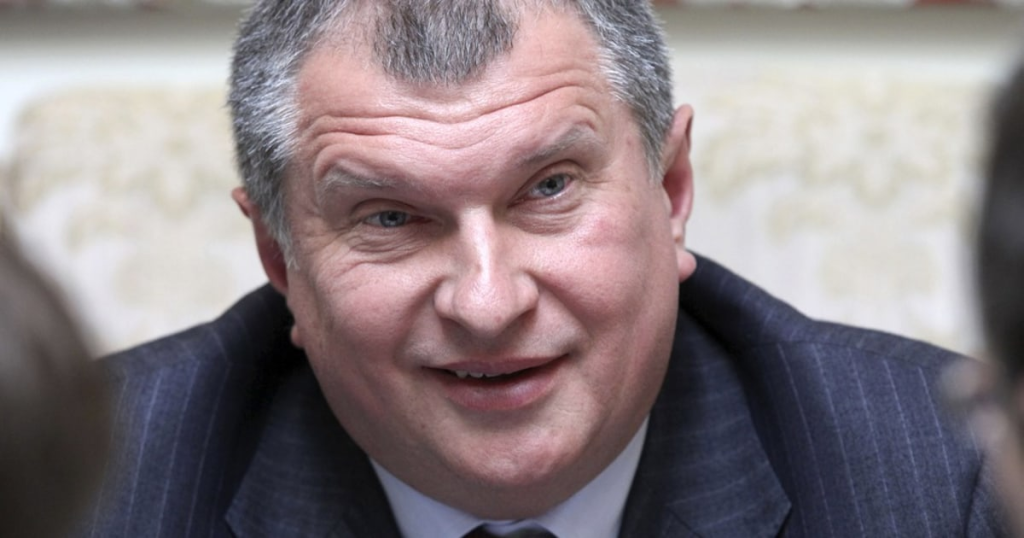
Igor Sechin
STATE-FLAGGED TANKERS AND OPERATIONAL SCHEMES
At present, a segment of the Russian shadow fleet has been formally transferred under the Russian flag and is operated directly by Russian companies, with Sovcomflot playing a central role. More than 80 percent of Sovcomflot’s shares are owned by the Russian state.
This includes a group of large-capacity tankers such as Liteyny Prospect (IMO 9256078), Sakhalin (IMO 9249128), Ladoga (IMO 9339313), and Zaliv Baikal (IMO 9360128). In recent years, these vessels have transported substantial volumes of Russian petroleum products, including cargoes from Far Eastern ports, contributing to revenue streams associated with Russia’s aggression against Ukraine. “Liteyny Prospect” has also operated in the Baltic, while “Ladoga” has been active in the Black Sea.
Sovcomflot managed these tankers through intermediary entities, changing their flags via companies such as the Saint Petersburg-registered, sanctioned “Yuzhny Fot” (“South Fleet Ltd”) and “Invest Fleet Ltd.” As of 2025, however, these vessels, except for “Zaliv Baikal,” which operated through the UAE-based “Starfish Ship Management” under the supervision of the Indian Register of Shipping, have shifted to the Russian flag and, by late February 2025, were located in Russian Far Eastern ports.
“Invest Fleet” is structured as a shell company with a nominal charter capital of 10,000 rubles. Russian registries obscure its formal management, but electronic contact data indicate the involvement of Gennady Semenov, affiliated with another Sovcomflot-linked entity, the Novorossiysk-based “Novoshipinvest,” as well as oversight by the sanctioned “SCF Arktika.” A comparable structure and pattern are reported for “Yuzhny Flot.”
The tankers “Liteyny Prospect,” “Sakhalin,” and “Ladoga” operate under technical documentation issued by the Russian Maritime Register of Shipping, presented as maritime safety certification. In addition, “Liteyny Prospect,” “Ladoga,” and “Zaliv Baikal” rely on insurance documentation from the Moscow-based insurer Ingosstrakh.
Among the joint schemes attributed to Ingosstrakh and the Russian Maritime Register of Shipping, allegedly involving financial manipulations through simulated accidents and the destruction of insured vessels, one frequently cited case is that of the fishing seiner Ivan Golubets. Sailing under the Georgian flag, the vessel sank in July 2019 following an engine room fire in the exclusive economic zone of Mauritania in the Atlantic Ocean.
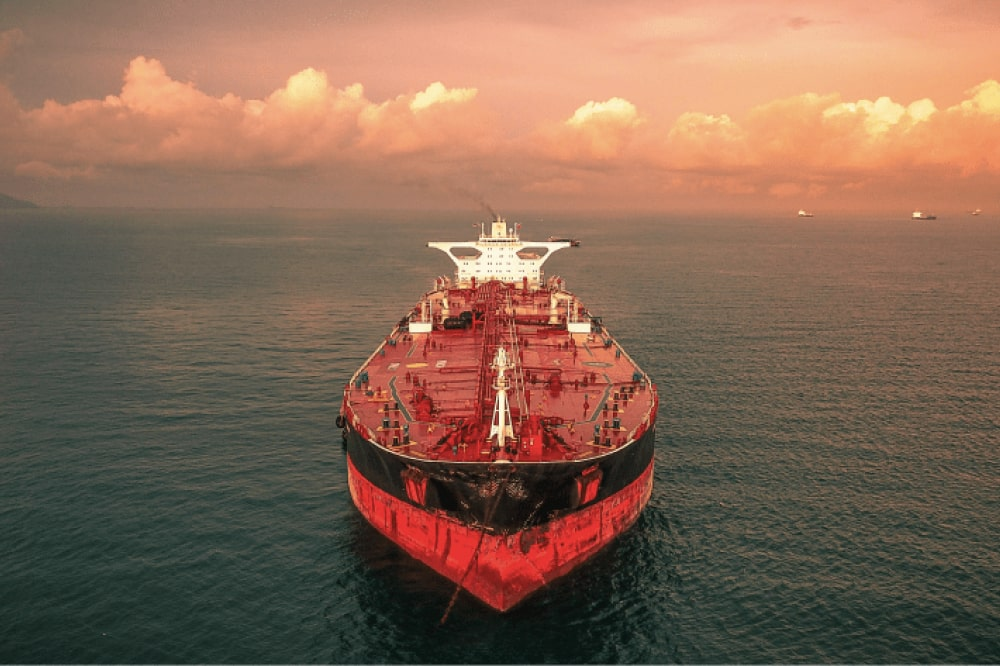
Liteyny Prospect
INLAND TANKER SEGMENT AND CORPORATE INTERCONNECTIONS
Russian companies also traditionally operate a “small” tanker fleet under the Russian flag. These vessels are used for transportation along Russia’s inland waterways and adjacent seas—the White Sea, Barents Sea, Baltic Sea, Sea of Azov, Black Sea, Mediterranean Sea, and Caspian Sea. They supply petroleum products to regional states and conduct ship-to-ship transfers onto larger tankers.
In April 2023 alone, nine tankers owned and operated by BF Tanker, flying the Russian flag and averaging up to 8,000 tons deadweight each, transported crude oil and petroleum products from Russian ports in the Black and Azov Sea basins.
In summer 2025, Daria (formerly “Balt Flot 11,” renamed without a change of flag) called at Samsun and transported Russian oil via both the Black Sea and the Volga. Its current ownership is formally concealed but is highly likely linked to the sanctioned Russian State Transport Leasing Company (Salekhard, tax number 720261827). “Balt Flot 12,” renamed “Alexandra,” reportedly created two years earlier by JSC “AR Vector” of Saint Petersburg, transported oil from Volgograd to the Sea of Azov in August 2025.
A group of similar tankers under the Russian flag and supervised by the Russian Maritime Register of Shipping remains owned by BF Tanker. For six of these vessels, the declared ISM Manager was LLC “Inok TM.” Identified personnel include Igor Furman, head of HR at BF Tanker, and Sergey Barchukov, its technical director; Barchukov previously served as assistant general director for tanker fleet technical operations at Saint Petersburg–based LLC “Inok TM” (tax code 7841458962).
Trade routes, long-term contracts, and personnel links connect BF Tanker closely with Lukoil. BF Tanker (IMO 4206557) is listed in European Commission Implementing Decision 2024/411 of 30 January 2024, which approved the list of shipping companies subject to the EU greenhouse gas emissions trading system under Directive 2003/87/EC. The Decision specifies that a particular Member State is responsible for each listed shipping company.
In 2017, BF Tanker’s co-founders included the Cypriot offshore “Voje Holding Limited” (HE 220195), registered in Nicosia at an address associated with entities referenced in the Panama Papers, as well as mention of “Inok Karelia,” a Belgian limited liability company “Inok” with an Antwerp address. At Verbindingsdok Oostkaai 5-7, 2000 Antwerp, there operates a ship management company “INOK NV” (IMO 1858497); its website, as listed on a local aggregator, redirects to that of Russian LLC “Inok TM.”
Rishat Bagautdinov, Deputy Chairman of the Council of the Russian Chamber of Shipping, was involved with “Inok TM” together with Cypriot “Voje Holding Ltd.” He also served as Chairman of the Board of Directors of “V.F. Tanker” and simultaneously as Chairman of the Board of Directors of JSC “Okskaya Shipyard,” where BF Tanker built its vessels.
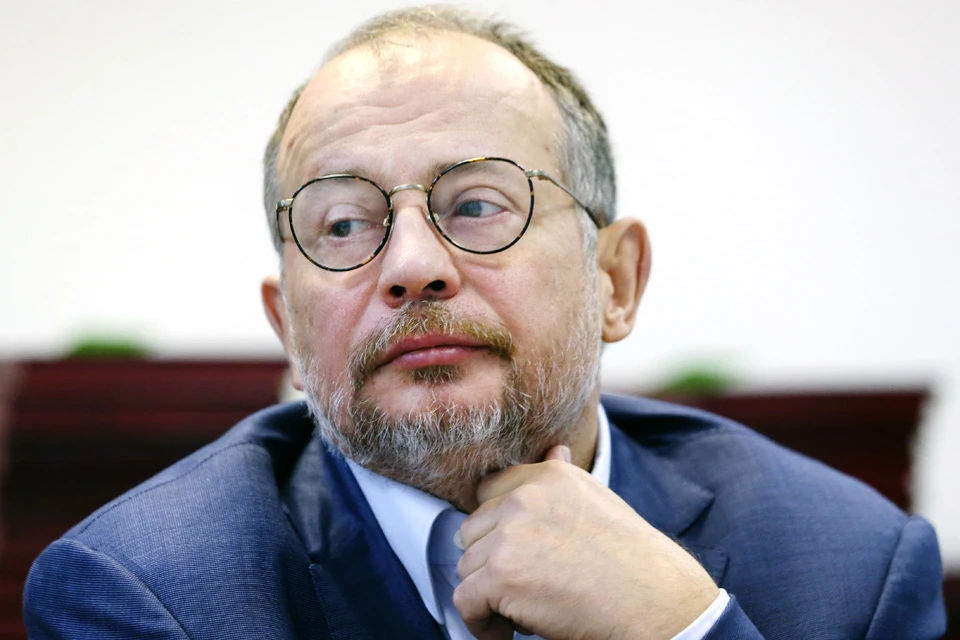
“V.F. Tanker” became part of the Cypriot structure “Volgo-Balt Transport Holding” (HE 142614), registered at the same Nicosia address as “Voje Holding Ltd.” In turn, “Volgo-Balt Transport Holding” forms part of the Amsterdam-registered international transport group Universal Cargo Logistics Holding, controlled by Russian oligarch Vladimir Lisin, who also owns JSC “Okskaya Shipyard” and has begun appearing on certain sanctions lists.
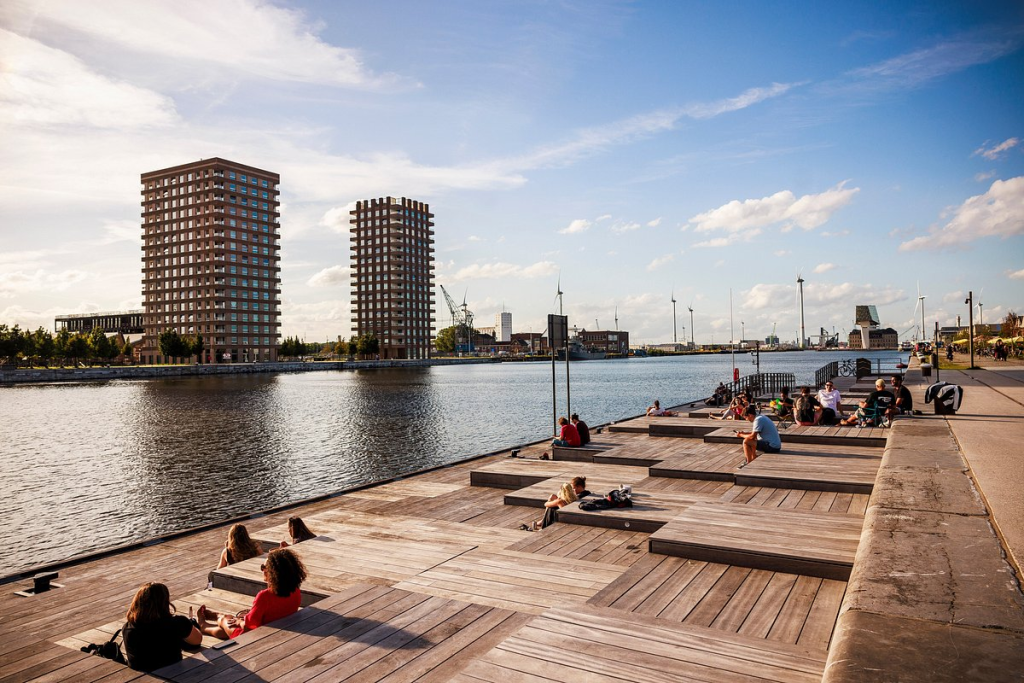
Antwerp
CREWING, TRADE UNIONS, AND OLIGARCHIC INFLUENCE
Hundreds of companies under Russian control supply crews to the shadow fleet. Some openly acknowledge affiliation with global maritime service providers, while others function as direct subsidiaries of major Russian oil corporations.
Among the latter are Gazpromneft Shipping (Saint Petersburg, tax number 7805480017), LLC “Transpetrochart” (Saint Petersburg, tax number 7825484443), and LLC “Transneft-Service” (Moscow, tax number 7710940202), which maintains a branch in Krasnodar.
Particular attention should be paid to a group of Russian oligarchic structures that historically controlled inland petroleum transport and now exert influence over segments of the shadow fleet. As noted, Rishat Bagautdinov, Chairman of the Board of JSC “Okskaya Shipyard,” is linked to “V.F. Tanker,” which forms part of “Volgo-Balt Transport Holding,” itself incorporated into the Amsterdam-registered Universal Cargo Logistics Holding controlled by Vladimir Lisin.
“Universal Cargo Logistic Holding B.V.” (registration number 34281257) is a Dutch company registered in Amsterdam. It positions itself as an international transport group providing rail and inland waterway cargo transportation, transshipment in Russian ports, and services in logistics, shipbuilding, and cruise operations. The holding describes its assets as including stevedoring companies of the “Saint Petersburg Sea Port” and “Universal Transshipment Complex” groups in northwestern Russia, the ports of Tuapse and Taganrog in the south, as well as the Volga, Northwestern, and Western shipping companies, alongside multiple shipbuilding and logistics entities.
Vladimir Lisin is a Russian billionaire active in logistics, steel, and oil. Analysts have identified connections between Lisin, UCL Holding, and “Fletcher Group Holdings Limited,” the former owner of Lisin’s steel enterprises. “Fletcher Group Holdings Ltd.” is registered in Nicosia and includes subsidiaries such as “CYNEF Ltd,” “ETVC Ltd,” and “Volgo-Balt Transport Holding Ltd.” “CYNEF Ltd” (HE 440232) bears a name identical to the Russian enterprise Kirishi Petroleum Organic Synthesis.
In 2020, Vladimir Lisin, these associated structures, and JSC First Freight Company were listed among affiliated persons of JSC “Volga Shipping Company.” The same year, Lisin and related companies—including “NLMK International B.V.” (registered at Amsterdam World Trade Center), LLC “Rumelko,” and JSC “First Port Company”—were listed among affiliated persons of JSC “Railcar Repair Enterprise Gryazi.”
Lisin also controls entities such as the “Shooting Union of Russia” and the “Institute of Social Development,” previously registered in Bech in eastern Luxembourg. He is a co-founder of the “Foundation for the Support of Russian Olympians” together with Vladimir Potanin, Roman Abramovich, Petr Aven, Viktor Vekselberg, and Oleg Deripaska. Lisin also owns the Fletcher Hotels network in the Netherlands.
State-controlled Russian maritime trade unions involved in shadow fleet activities play a significant coordinating role, influencing shipowners and interacting with the global maritime sector. A central body is the Moscow-based “Federation of Trade Unions of Maritime Transport Workers,” headed by Yuri Sukhorukov. Key affiliated entities include the “Russian Trade Union of Maritime Transport Workers,” headed by Valentin Sirotyuk, and the Russian Seafarers’ Union (RPSM), also registered to Sukhorukov.
These structures operate under close state oversight. Sukhorukov has been awarded the Russian Order “For Merit to the Fatherland,” and RPSM reports that it represents approximately 70,000 seafarers and more than 400 vessels under its collective agreements, including one with Sovcomflot. Sovcomflot historically served Soviet state interests in overseas operations, including military-related activities.
RPSM lists as “social partners” the Volga Shipping Company and global crewing providers such as V.Ships, Marlow Navigation, and Tsakos Shipping and Trading S.A. Investigative reporting has linked these entities to the supply of seafarers for the Russian tanker fleet and to cooperation networks associated with Russian state interests in Europe.
In addition, RPSM, together with the ITF Seafarers’ Trust in London, co-founded the “Novorossiysk International Seafarers Center,” described as an institutional platform for engagement with foreign crew members arriving at Russian-controlled Black Sea ports. The Federation also incorporates the “Trade Union of Maritime Transport Workers of the Republic of Crimea,” registered in occupied Kerch, to Irina Chernenko, identified as a “deputy of the State Council of Crimea” representing the Edinaya Rossiya party.
Vladimir Lisin
SANCTIONS, LEGAL RISKS, AND COUNTERMEASURES
Sanctioned Entity Case Study: Agro Tanker Group
“Agro Tanker Group” was placed under U.S. sanctions in January 2025. Its tanker, sailing under the Gambia flag, was subsequently designated by the United Kingdom, the European Union, Switzerland, Canada, Australia, and Ukraine. Following these measures, the vessel formally changed ownership, although reported influence over its crew structure remained unchanged.
The group’s founder is currently the Moscow-based ATG Holding; previously, it was registered to Dmitry Kolyadin, now the nominal founder of entities including “Tomsk Oil Refinery,” “Tomsk Oil and Gas Company,” and “Tomskneftepererabotka.” Dmitry Kolyadin is the son of Viktor Kolyadin, a Russian weapons designer convicted in 1998 in a case involving the alleged transfer of information related to the Iskander missile system. In 2016, Dmitry Kolyadin appeared in a corporate raiding scandal involving the Kalashnikov Concern (formerly Izhmash), alongside individuals connected to Directorate “P” of the FSB’s Economic Security Service, responsible for oversight of the fuel and energy complex.
Systemic Enabler: Russian Maritime Register of Shipping (RMRS)
A central institutional pillar of the shadow tanker fleet is the Russian Maritime Register of Shipping (RMRS). Its role extends from vessel construction at Volga shipyards to certification and oversight of crewing companies servicing Russian tankers. Although the European Union has sanctioned RMRS, equivalent measures have not been synchronized by the United States, Canada, the United Kingdom, New Zealand, Australia, or Japan. Subsidiaries, including the Association Russian Register and NIKIMP, remain outside comprehensive international scrutiny. A comparable approach is warranted regarding the Russian Classification Society.
RECOMMENDATIONS FOR DECISION/POLICY MAKERS
Multilateral and Institutional Measures
- Synchronize sanctions against RMRS, its subsidiaries (including the Association Russian Register and NIKIMP), and the Russian Classification Society across major developed jurisdictions.
- Terminate RMRS participation in the International Maritime Organization and relevant UN economic commissions; withdraw recognition and end cooperation agreements with other classification societies, maritime administrations, and port state control memoranda.
- Expand sanctions scope to include smaller Russian tanker operators whose cumulative impact on maritime safety and European maritime policy is significant.
Coastal State Jurisdiction and Transit Controls
- Denmark should consider enhanced maritime safety requirements for transit through the Danish Straits in the Baltic Sea.
- The United Kingdom and France may impose additional safety and environmental standards for transit through the English Channel (La Manche) under the 1988 bilateral declaration, where transportation of sanctioned Russian oil may not qualify as ordinary commercial navigation.
- Prepare enforcement infrastructure, including capacity for tanker detention, cargo safeguarding, and extended judicial proceedings.
- Consider transit prohibitions for specific vessels in the Baltic Straits or the Channel on maritime safety or environmental grounds.
Intelligence and Enforcement Measures
- Document non-commercial operational patterns of Russian oil tankers, including potential infrastructure damage (subsea cables and pipelines), deployment of aerial devices and buoys, reconnaissance activity, and the inclusion of Russian crew members lacking maritime qualifications but possessing military or special training.
- Intensify regulatory exclusion, removing shadow fleet vessels from reputable classification societies and “white list” flag registries.
- Adopt coordinated port state control, blacklisting of shadow fleet vessels, and those previously involved.
Financial, Insurance, and Industry Responsibilities
- Encourage major P&I clubs to declare the impossibility of insuring vessels linked to the shadow fleet and adopt strict positions regarding ships supervised by RMRS.
- Continuously monitor insurance, classification, crewing, and trading entities in developed jurisdictions that systematically service Russian oil transportation.
- Hold flag state administrations accountable for safety, environmental, and critical infrastructure risks associated with shadow fleet tankers flying their flags.
- Promote industry self-regulation: European shipowners should suspend cooperation with RMRS, avoid Russian crewing companies, assess employment of seafarers previously serving on shadow fleet vessels, and evaluate the risks of selling vessels that may subsequently be incorporated into shadow fleet operations.
INFILTRATION OF SECURITY PERSONNEL AND HYBRID MARITIME THREATS
Sanctions policy should extend to Russian crewing companies and maritime training centers that prepare personnel for shadow fleet vessels.
Global maritime corporations may be urged to cease crewing operations in Russian-controlled territories, terminate cooperation with Russian crewing agencies and RMRS, and refrain from staffing shadow fleet vessels or employing seafarers from occupied Ukrainian regions.
Shadow fleet tankers may be used not only to transport sanctioned oil but also to carry compact high-value cargo such as cash, gold, precious metals, or narcotics, and potentially to deploy surface or underwater drones or conduct monitoring and sabotage of critical infrastructure. In this context, the recurring presence of Russian nationals on board without standard maritime qualifications is significant.
Although crewing agencies arrange certificates through affiliated training centers, obtain flag state documentation, and provide visa and logistical support, the employment of such individuals in “substandard” or auxiliary positions lacks ordinary commercial justification.
Crew lists from several tankers illustrate this pattern.
For example, Boracay (formerly “Pushpa” and “Kiwala”), sailing under the Benin flag, departed the Russian port of Primorsk for Sikka in early July 2025; its crew was likely assembled in Primorsk in late June. On 20 September 2025, it again departed Primorsk for India. The September crew differed substantially from the June crew, with a complete replacement of ratings and partial replacement of officers; in both instances, most crew members were nationals of China or Myanmar.
In both voyages, however, the only Russian citizens on board were two individuals listed as “Technician.” This optional category of “other technical personnel” requires fewer maritime certifications and involves no mandatory skills readily verifiable during inspection.
In June, Artem Tomilov and Stanislav Babichev were listed; in September, Maxim Dmitrenko and Alexander Tishchenko. Babichev (born 11 December 1978) was registered at military unit 71628 in the Tver region and previously resided in Kubinka-1, home to a Russian military intelligence special purpose center. Tomilov (born 23 March 1995) lived in Saint Petersburg and had served in the Russian police, including deployment to the occupied Luhansk region in 2022. Dmitrenko (born 26 November 1986) formerly worked as a cash collector in the Rostov region; Tishchenko (born 1 April 1991) had served in the Russian Aerospace Forces.
On tanker Lebre, “Technician” Boris Rudakov (born 19 December 2003), formerly employed by Russia’s Ministry of Defense and police in Rostov-on-Don, was included in the crew; the vessel was sanctioned in 2025 by the EU, the United Kingdom, and Switzerland.
On tanker Maini, under the Gambia flag, which departed Ust-Luga for Vadinar on 18 October 2025, two individuals, Alexander Strokov and Vladimir Radko, were listed as “Supernumerary.” The vessel was sanctioned in 2025 by the EU, the United Kingdom, Australia, Canada, and Switzerland.
On tanker Mystery, also under the Gambia flag and departing Primorsk for Sikka on 21 October 2025, Damir Sakharov and Taras Moskvichev were listed as “Supernumerary.” The vessel was sanctioned in 2025 by the EU, the United Kingdom, Australia, Canada, New Zealand, Ukraine, and Switzerland.
On tanker Kira K, sailing under the Panama flag and departing Primorsk on 21 October 2025, two “Supernumerary” personnel, Alexander Malakhov and Viktor Alexandrov, were included. Alexandrov is listed in the “Myrotvorets” database as a participant in the Wagner formation and the war in Ukraine. The vessel was sanctioned in 2025 by the EU, the United Kingdom, Australia, Canada, New Zealand, and Switzerland. In all these cases, the named individuals were the only Russian nationals in crews otherwise composed predominantly of Myanmar and Chinese citizens.
Maritime practice allows temporary “Technician” or “Supernumerary” positions for specific short-term tasks, not as permanent augmentations. Responsibility for such personnel lies with the master, the shipowner, and the flag state administration, which must justify their inclusion beyond the minimum safe manning document. The systematic placement of Russian nationals without maritime backgrounds but with military or security training suggests coordinated direction.
Such individuals are effectively subordinated to Russian military or intelligence structures, potentially including the Main Directorate of the General Staff and relevant units of the Federal Security Service, while being formally employed through Russian crewing agencies under centralized oversight.
Shadow fleet tankers could be used to damage underwater cables or pipelines, particularly in the Baltic Sea, North Sea, or Mediterranean Sea, or to provide cover for such actions by drones or sabotage groups, thereby obscuring attribution and blurring the threshold between commercial navigation and hostile activity.
Recent precedents cited include damage to cables and pipelines and repeated drone incidents in Germany during 2025, including over Munich Airport (2–3 October), the Nordholz naval airbase (8 January), Schwesing (28–29 January), Bad Salzungen (15 April), the Bundeswehr exercise “Gelber Merkur” (17–21 May), the Wilhelmshaven naval arsenal (February, March, and 4 June), a chemical plant in Marl (13 January), and the Biblis Nuclear Power Plant (4 May). Certain investigations reportedly examined possible links to vessels associated with Norway’s HAV Shipping Group.
The systematic inclusion in tanker crews of individuals not performing genuine seafarer functions but allegedly tasked with activities linked to Russian special services, facilitated by Russian-controlled crewing agencies and trade unions, conflicts with the standards of the Maritime Labour Convention and the International Convention on Standards of Training, Certification and Watchkeeping for Seafarers. It also raises questions under the United Nations Convention on the Law of the Sea regarding the definition and status of merchant vessels.
If personnel listed as crew were to engage in active military or sabotage operations while benefiting from the legal protections accorded to merchant ships, such conduct could qualify as perfidious use of protected status under the law of armed conflict. Moreover, systematic misuse of crew documentation mechanisms would contradict principles reflected in IMO Assembly Resolution A.1192(33) concerning maritime fraud and the criminalization of unlawful ship operations.