The transformation of public administration in the Russian Federation is increasingly subordinated to the goals of the systemic militarization of civilian apparatus and the formation of a closed caste of managers whose legitimacy rests on shared participation in the military aggression against Ukraine. Launched on Vladimir Putin’s direct instructions in spring 2024, the Time of Heroes staff programme has, within two years, evolved from a pilot ideological project into a centralized conveyor belt for reproducing the ruling elite. The Kremlin uses this mechanism not only to displace the remaining technocratic and economically minded officials with a loyal militarized stratum, but also to prevent internal destabilization following the Wagner PMC mutiny crisis.
Autumn 2026 marked a watershed in this strategy implementation. The results of the parliamentary and regional election campaigns demonstrated the regime’s shift from piecemeal administrative appointments to the systematic entrenchment of combatants in the legislature through a controlled electoral mechanism. This process completes the formation of a parallel military bureaucracy at every government level.
The veteran faction in the State Duma as the main electoral shift of 2026
The Single Voting Day of 18–20 September 2026 marked a qualitative shift in the functioning of the Time of Heroes programme, opening the way for combatants to gain direct control over law-making at the federal level. Following the elections, 19 programme participants and graduates won seats in the 9th State Duma, forming the core of a future combatant faction.
Candidates were nominated under the direct supervision of the ruling party campaign headquarters and the Russian Presidential Administration, covering both federal party lists and single-member constituencies. In particular, Lieutenant Colonel of the Medical Service Magomed Valikhov won the Makhachkala single-member constituency in the Republic of Dagestan; before the election, he completed a management internship as the republic’s deputy health minister under the mentorship of the Dagestan head, Sergei Melikov. Eduard Kazymov won a seat in Moscow’s Tushino constituency, while Denis Chernavin won in the Ufa constituency in Bashkortostan. Sergei Kovalyov entered parliament on United Russia’s federal party list.
A landmark personal trajectory was the election to the State Duma of Vladislav Golovin, known by the call sign “Struna” (eng: string). A commander of assault groups of the 382nd Separate Battalion of the 810th Separate Naval Infantry Brigade during the assault on Mariupol, Golovin was selected for the programme’s first cohort after being wounded. He then became head of the Main Headquarters of the all-Russian military-patriotic movement Yunarmiya, and in autumn 2026 converted his media profile into a federal parliamentary mandate.
In addition to federal parliament, the militarized elite moved into regional legislatures and municipal councils. Colonel Yevgeny Chintsov, a recipient of three Orders of Courage, became chairman of the Nizhny Novgorod City Duma; Major Ivan Boldyrev took a seat in the Tambov Regional Duma; Lieutenant Artur Potapov joined the Legislative Assembly of Primorsky Krai; and Roman Kulakov, a captain in the military intelligence of Russia’s Black Sea Fleet, won a seat in the Legislative Assembly of occupied Sevastopol.
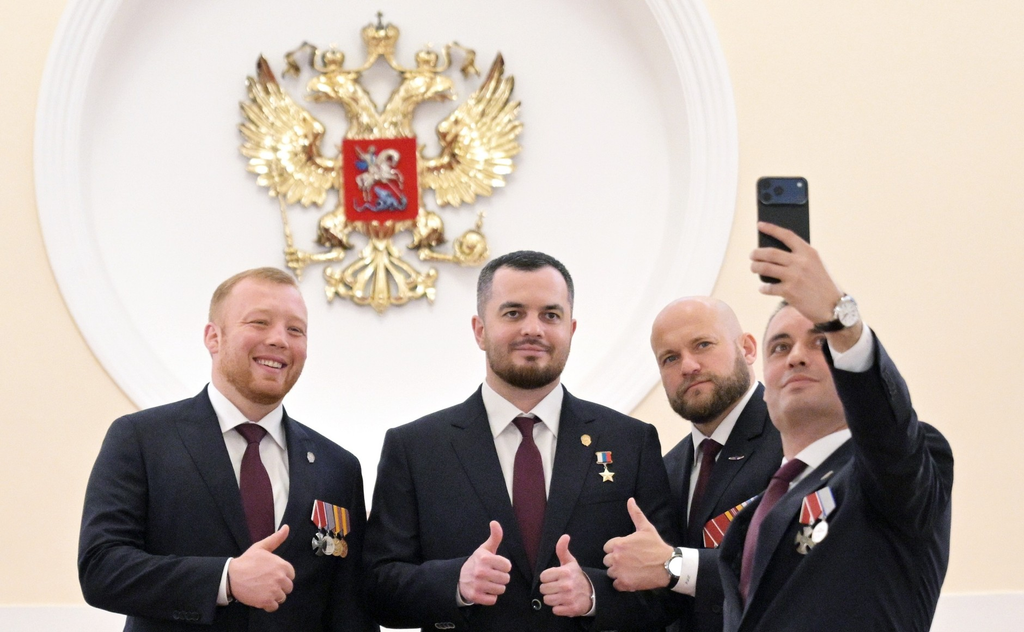
A strategic precedent was set by the appointment of Anatoly Sysoyev, a participant in the programme’s second cohort, a lieutenant colonel of the engineering troops and a Hero of Russia, to the Central Election Commission of the Russian Federation. His inclusion in the electoral body established a direct presence of the security forces in the organization of elections, vote counting and the administration of online voting in future electoral cycles.
Overall, as of autumn 2026, the number of programme graduates appointed to posts in federal ministries, regional governments, electoral bodies and state corporations exceeded 120.
Individual strategies for redistributing candidates among executive structures
The personnel policy of the Russian Presidential Administration reveals a carefully calculated technique for segregating graduates. Real financial and administrative levers are handed exclusively to those with a prior bureaucratic or political background, while field commanders without management experience are channelled into ideology and propaganda.
The most prominent figure at the top level of the executive branch is Artyom Zhoga, former commander of the Sparta reconnaissance battalion and former head of the occupation “People’s Council of the DPR.” After graduating from the first cohort, Zhoga was appointed Presidential Plenipotentiary Envoy to the Urals Federal District and made a permanent member of the Russian Security Council, where he was given responsibility for overseeing the Urals defence-industrial complex and monitoring the ideological loyalty of regional elites.
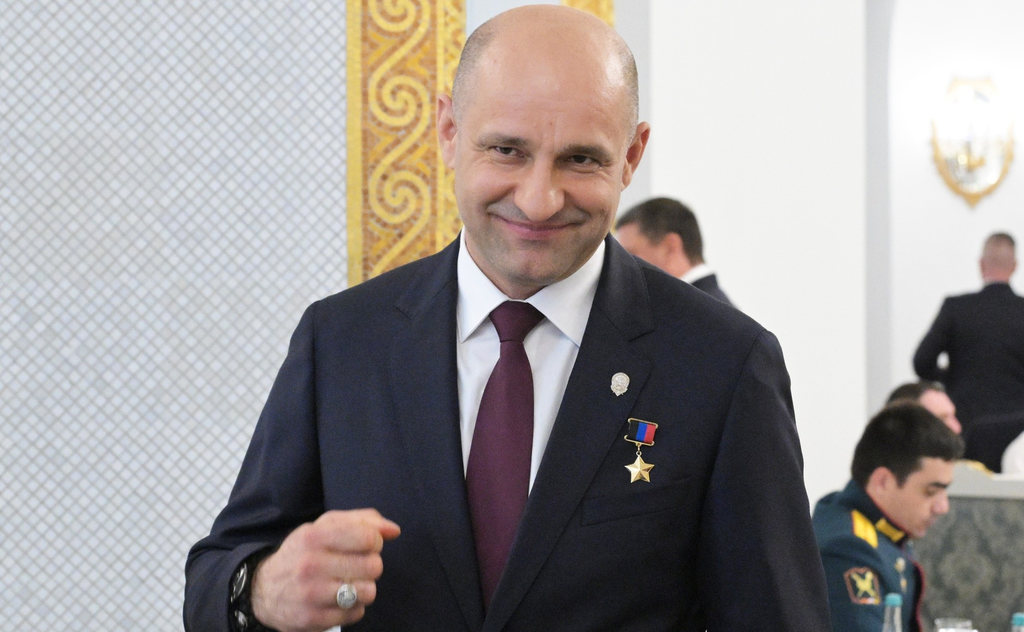
The first graduate of the programme to take charge of a federal subject was Yevgeny Pervyshov. A former mayor of Krasnodar and State Duma deputy, Pervyshov volunteered in autumn 2022 for the BARS-Kaskad battalion created for officials, which allowed him to use formal veteran status to legitimize his place in the Time of Heroes programme and his subsequent appointment as governor of Tambov Region.
A similar path was taken by Maria Kostyuk, former deputy head of the Defenders of the Fatherland Foundation, who directly managed the selection of programme participants and later became governor of the Jewish Autonomous Oblast. Major General Alexander Shuvayev also joined the gubernatorial corps: in May 2026 he was appointed acting governor of Belgorod Region, and in September– elected as a governor.
A significant group of graduates secured positions in strategic state monopolies and high-tech defence segments, taking on oversight of production cycles and social funds. Vitaly Podlesny, a participant in the second cohort, became, under the supervision of his mentor Vladimir Verkhovtsev, deputy director general for production system development and digitalization at JSC Rosatom Nedra, gaining control over optimizing raw-material supply chains for Russia’s nuclear sector. Vladimir Saybel, former commander of a reconnaissance company of the 52nd Mobilization Regiment, became deputy head of the Social Development Department of Russian Railways (RZD) under the patronage of the company’s CEO and chairman of the management board, Oleg Belozyorov, while also sitting on United Russia’s General Council.
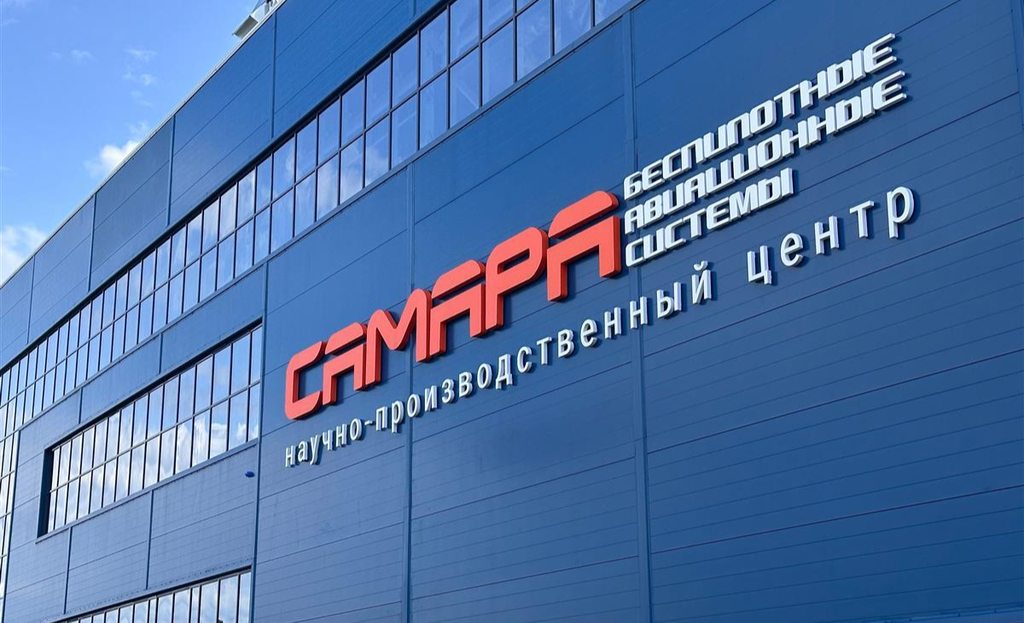
The development of the strike-drone sector has also come under the control of programme personnel. Konstantin Yashin, a veteran of the fighting against Ukraine, became head of the Samara Research and Production Centre for Unmanned Aerial Systems with the backing of the deputy head of the Presidential Administration, Maxim Oreshkin, while Eduard Shonov, a recipient of two Orders of Courage, became deputy head of the autonomous non-profit organization Federal Centre for Unmanned Aerial Systems, relying on the patronage of Moscow’s deputy mayor Natalya Sergunina. Former marine Yevgeny Serov became an adviser on satellite manufacturing at the Roscosmos State Corporation, supervised by its director general Dmitry Bakanov, while Konstantin Aksyonov became project director at the Civil-Military Technologies Development Division of the Agency for Strategic Initiatives.
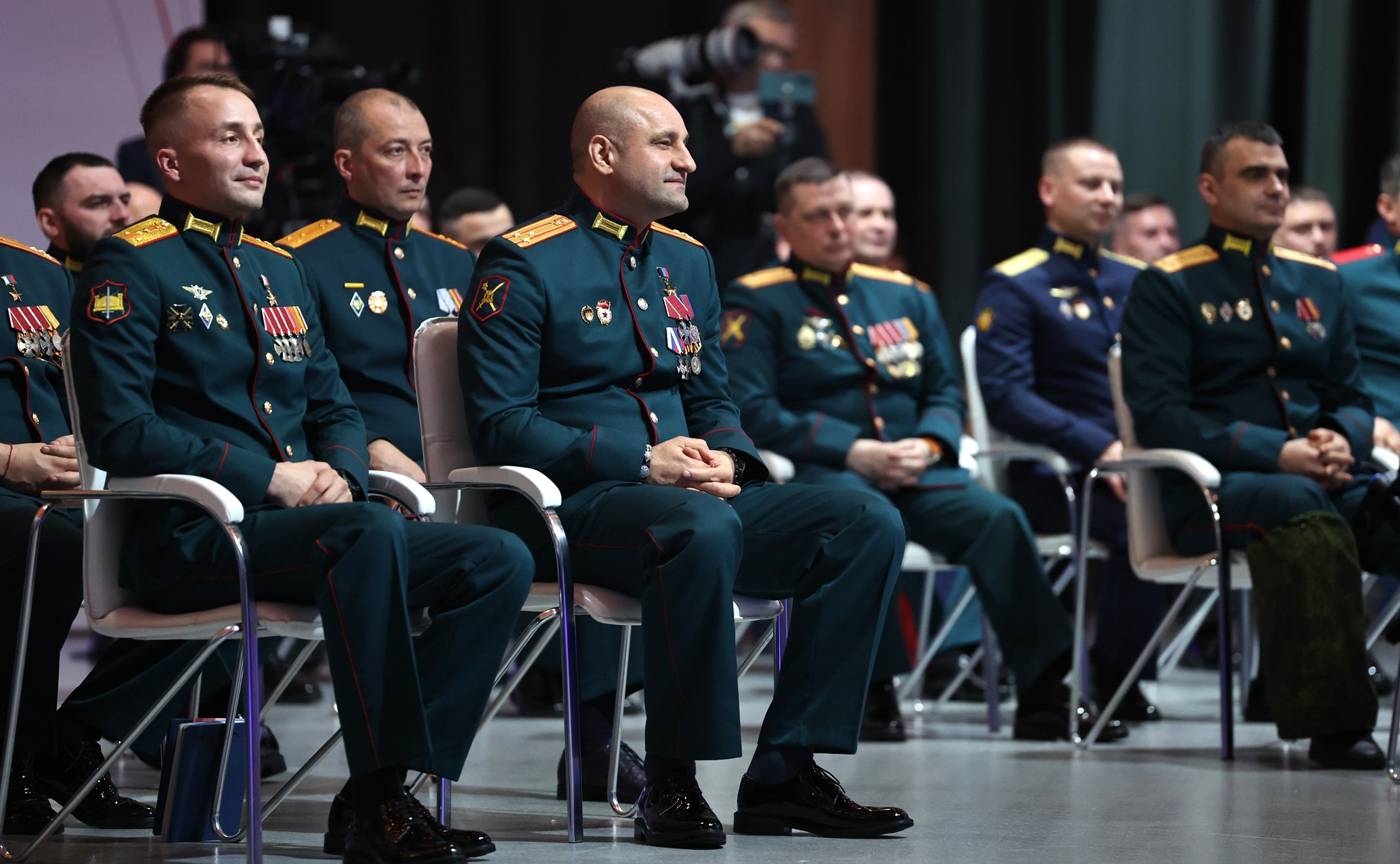
By contrast, about 80% of combat officers with no previous ties to the bureaucracy were channelled into patriotic education, youth movements and ideological control. Captain of the Medical Service Darya Svetyash, who fought for Hostomel with the 31st Separate Air Assault Brigade, became, under the patronage of Federation Council Chair Valentina Matviyenko, a regular participant in public events of the upper house of parliament and pro-government youth movements. Major Artur Orlov, an assault tank battalion commander, was appointed board chairman of the Movement of the First, centralizing control over the militarization of Russian schoolchildren.
Major Igor Yurgin, commander of the “Black Mamba” assault detachment, became a department director at Russia’s Ministry of Education, gaining leverage over school basic military training curricula. Hero of Russia Baldan Tsydypov became head of patriotic work at the Russian Society Znanie, backed by Zabaykalsky Krai Governor Alexander Osipov, while Lieutenant Colonel Sergei Boyko was named head of youth policy and education at the Ministry of Science and Higher Education under Minister Valery Falkov’s direct mentorship.
Shielding war criminals through political rehabilitation and immunity
Through the Time of Heroes programme, the Russian state shields and rehabilitates military and security personnel suspected by Ukrainian and international investigators of grave war crimes against civilians. Integration into the state apparatus, appointment to executive posts, and the granting of parliamentary mandates give these individuals procedural immunity at home and protection from extradition under Article 61 of the Russian Constitution.
A well-documented example is the biography of Captain Nursultan Mussagaleyev, commander of a reconnaissance platoon of the 104th Air Assault Regiment of the 76th Air Assault Division of the Russian Airborne Forces. Mussagaleyev is formally suspected under Part 1 of Article 438 of the Criminal Code of Ukraine of ordering the abduction, torture, and shooting of a 29-year-old civilian in the village of Dmytrivka, Bucha District, Kyiv Region, in March 2022. After completing the programme’s first module at Senezh, Mussagaleyev was elected head of Orenburg Region’s Novosergiyevsky District in March 2025. Following the September 2026 elections, he won a State Duma seat on the United Russia list (certified by the CEC on 25 September), stepped down as district head, and gained parliamentary immunity.
Similar protection was extended to Colonel Sergei Karasyov, former commander of the 31st Separate Guards Air Assault Brigade, whose name appears in criminal proceedings brought by the Office of the Prosecutor General of Ukraine in connection with the shooting of civilians in Irpin, Kyiv Region, during the occupation in spring 2022. After training in the second cohort of the Time of Heroes programme, Karasyov was appointed deputy head of the Samara urban district in January 2026, joining the leadership of a major industrial centre.
Within the executive branch of Bryansk Region, Police Colonel Andrei Frolenkov, former deputy commander of the “Arsenal” OMON unit of the Rosgvardiya Directorate, was made acting deputy governor. Frolenkov commanded security forces during the seizure of the Chornobyl Nuclear Power Plant and the filtration operations across the Exclusion Zone and adjacent Kyiv districts. Despite being sanctioned under the EU’s 12th package for these actions, he now controls regional resources in a Russian border region.
In addition, regional ministerial portfolios were also handed to military officers of the 70th Guards Motor Rifle Regiment of the 42nd Motor Rifle Division, Lieutenant Colonel Yuri Abayev (call sign ‘Buyvol’) and Senior Lieutenant Temirlan Abutalimov. Both appear in Ukrainian military intelligence intercepts as commanders who ordered the execution of four Ukrainian prisoners of war near Robotyne, Zaporizhzhia Region, in May 2024. After completing training, Abayev became head of the Ministry of Labour and Social Development of the Republic of North Ossetia–Alania, while Abutalimov became acting Minister for Ethnic Policy and Religious Affairs of the Republic of Dagestan; in spring 2026, however, he temporarily vanished from public view, probably as a result of a conflict with local clans.
Artyom Zhoga himself, head of the presidential envoy’s office in the Urals and a long-standing leader of “DPR” formations, is suspected by the Security Service of Ukraine of encroaching on Ukraine’s territorial integrity and waging a war of aggression. He is also under direct sanctions imposed by the United States, the European Union, the United Kingdom and Japan.
Shadow contractors and digital leaks surrounding logistics at the closed Senezh campus
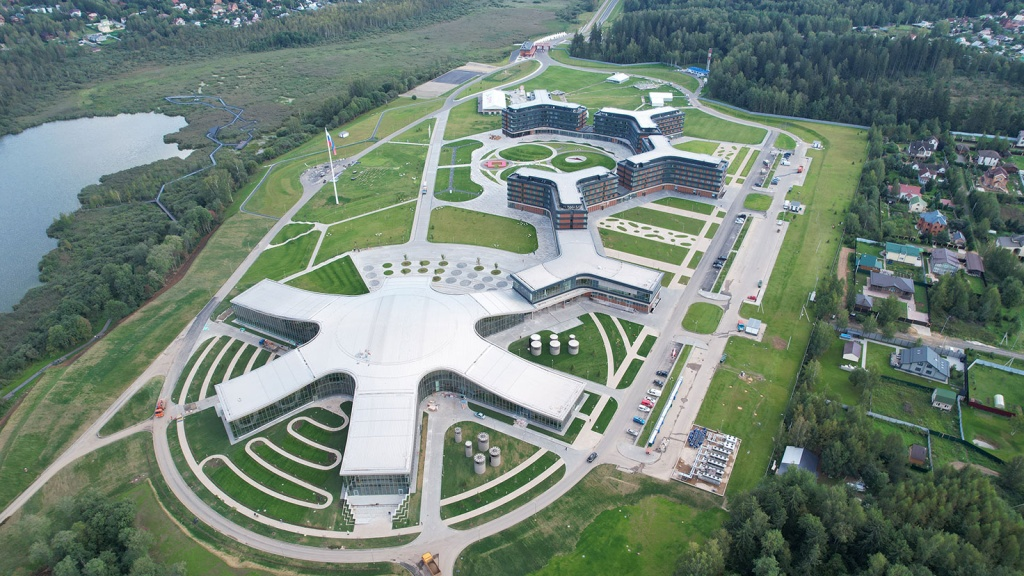
The main physical hub for the training modules is the Senezh Management Workshop — a closed, self-contained complex of 85 hectares on the shore of the lake of the same name in Solnechnogorsk, Moscow Region. Under 24/7 guard, the complex is subordinate to RANEPA’s Higher School of Public Administration (HSPA), headed by Rector Alexei Komissarov.
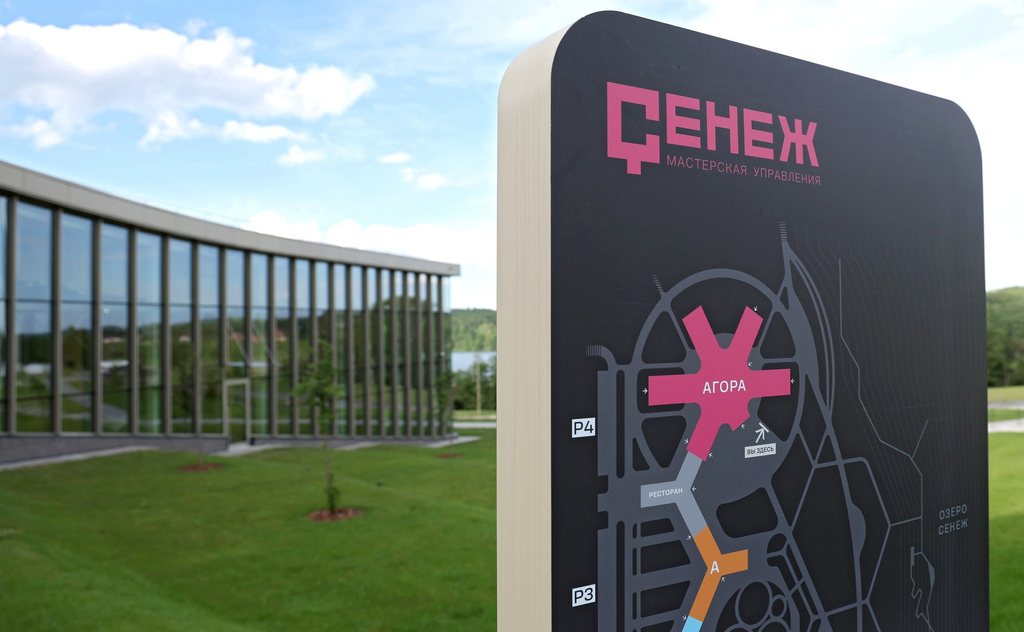
The centrepiece of the base is the six-petalled Agora teaching building, with a total floor area of 10,000 square metres, built beneath a single glued-laminated-timber dome without internal supporting columns. Inside are a 780-seat amphitheatre, high-resolution radial media screens, and a network of smart CCTV cameras with biometric identification and automatic tracking of participants’ movements. Four five-storey accommodation blocks were built on the lakefront for the combatants, connected to classrooms via enclosed, heated walkways that restrict movement beyond the secured perimeter.
Financial and logistical operations at the Senezh campus are monopolized by a small circle of well-connected contractors. The primary technical contractor and builder is Zaur Nasyrov’s LLC Connect, which has secured roughly 11.6 billion roubles in state contracts for presidential youth and education projects. Full-board catering for participants and officials is run by BE:CATERING under Maxim Belyayev, head of the Russian Union of Public Catering Combines. Facility management, cleaning, and auxiliary staffing are handled by Coleman Group, LLC CS Project, and LLC Technomedia Group.
Training follows a strict, barracks-like schedule lasting up to 17 hours a day: 6:00 AM park runs, lectures on fiscal federalism and state oversight until 6:00 PM, and administrative case studies running until 11:00 PM. The curriculum also includes closed off-site trips, such as a summer 2024 North Pole expedition aboard the nuclear icebreaker “50 Let Pobedy.”
Despite the facility’s restricted status and proximity to the Russian Special Operations Forces’ Senezh Special Purpose Centre (Military Unit 92154; formerly GRU’s 322nd Specialist Training Centre), significant security and intelligence vulnerabilities have been exposed. Open-source data from fitness apps (Garmin, Strava, and MyFitnessPal) used by participants helped reconstruct the complex’s internal logistics. Specifically, tracking daily activity of Major General Yan Leshchenko in Luhansk Region exposed the campus layout and the exact schedules for on-site sessions in July and September 2025 and April 2026, matching them to visits by senior Kremlin lecturers.
Bureaucratic sabotage, combatant misconduct and frontline shortages
Integrating combatants into civilian government has sparked widespread resistance from the traditional bureaucracy. Viewing the appointees as unqualified protégés cloaked in political immunity, regional officials resort to covert bureaucratic containment: graduates are placed atop nominal working groups, advisory councils, or patriotic-education committees while being stripped of any real signing authority over budgets or municipal property.
The integration process is further complicated by deviant behaviour among graduates stemming from post-traumatic stress disorder (PTSD), a lack of basic legal knowledge, and alcohol problems. A clear case is that of Major General Alexander Shuvayev, a Hero of Russia and recipient of three Orders of Courage. In January 2026, he was appointed deputy governor of Irkutsk Region, and in April he was regarded as the front-runner to head Belgorod Region. However, his appointment was delayed by almost a month; the general was drunk before a meeting with Vladimir Putin, and people around him spoke of alcohol abuse. Nevertheless, on 13 May 2026 Shuvayev was appointed acting governor, and on 20 September he was elected governor of Belgorod Region with nearly 66% of the vote – demonstrating the Kremlin’s readiness to turn a blind eye to disciplinary risks for the sake of loyal cadres. Telling failures were also recorded during the 2026 election debates, when some programme participants proved unable to answer basic questions about the budget process and the powers of municipal authorities.
Fictitious enlistment in rear-echelon units like BARS-Kaskad has become a tool for older regional officials to secure corruption amnesties and dodge criminal charges. Sergei Kozin, former head of Penza District, convicted of bribery, used a brief stint at the front to avoid serving a custodial sentence and have his conviction expunged, returning to public life as a “veteran manager.”
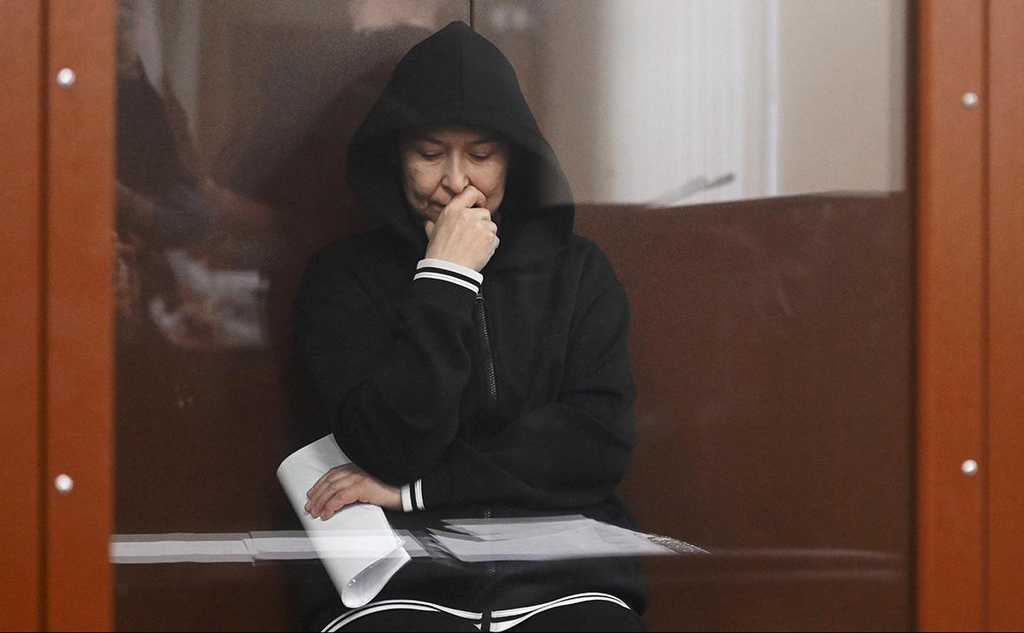
The Time of Heroes brand has doubled as a conduit for siphoning state funds. In February 2026, authorities arrested Bashkortostan’s Culture Minister, Amina Shafikova, for large-scale embezzlement and bribery involving money earmarked for the national Time of Heroes patriotic song competition.
Since January 2026, the programme has faced a critical personnel constraint directly in the combat zone. An acute shortage of junior and senior officers forced the command of Russia’s occupation groups of forces, notably the “Centre” group, to impose a complete ban on serving personnel taking leave to study in Solnechnogorsk. The programme’s leadership had to move most frontline candidates onto a “deferred training” track, granting them access to lectures only after severe injury, demobilization, or medical discharge.
Servicemen attempting to leave the training complex voluntarily faced command intimidation, including threats of immediate redeployment to assault units in the “North” Group of Forces on the Kharkiv front.
Scaling of Kremlin personnel practices through regional networks and the emulation of Russian experiment by satellite states
Outside Moscow, the Kremlin rolled out regional franchises funded by local budgets across over 80 federal subjects. Key offshoots include “Valour of Khingan” in the Jewish Autonomous Oblast (launched by Maria Kostyuk), Krasnodar Krai’s 30-million-rouble “Heroes of Kuban,” Samara’s “School of Heroes,” and Chelyabinsk’s “Heroes of the Southern Urals.” The stated goal: install combat veterans in up to 20% of municipal district head posts by the end of 2026.
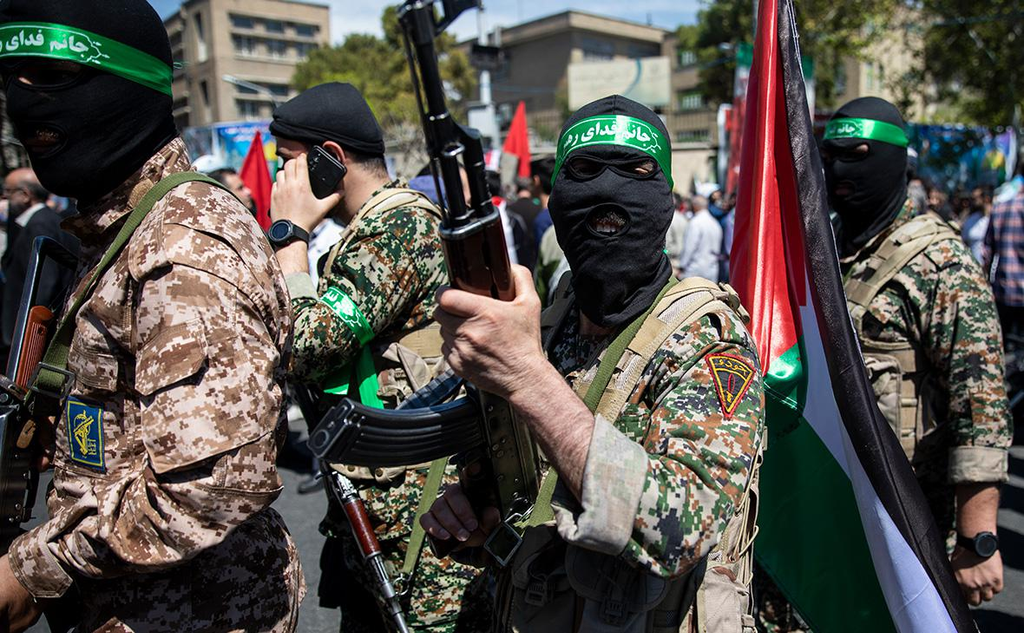
Moscow’s allies increasingly adapt its militarized governance model. Tehran draws parallels to the IRGC to entrench an anti-Western bureaucracy; Sahel juntas in Mali, Burkina Faso, and Niger use Russian training doctrines to legitimize rule by military castes; Pyongyang touts the program as validation of its songun ideology; and Hanoi analyzes it as a mechanism to manage demobilized veterans and neutralize social protest.
Strategic conclusions and recommendations for countermeasures
Institutionalizing irreversible aggression through Time of Heroes deputies elected in September 2026 cements the Russian parliament’s militaristic trajectory. This veterans’ bloc will obstruct any attempt to reconsider the war, cut defense spending, or resume talks grounded in international law.
Concurrently, the programme neutralizes veteran discontent and erects a counter-mutiny barrier. By co-opting influential field commanders with parliamentary mandates, deputy-governorships, and corporate quotas, the Kremlin strips the 1.5-million-strong veteran population of an organizational core.
Countering this requires coordinated international sanctions. The EU, the US Treasury, and allied law enforcement agencies must synchronize sanctions targeting all alumni holding legislative and administrative office, levy blocking sanctions against primary contractors and operators (LLC Connect and RANEPA’s HSPA), and issue international arrest warrants to isolate Russia’s emerging military state-backed bureaucratic elite.