Faces of sanctions evasion: IKAR’s investigation

Faces of sanctions evasion: IKAR’s investigation

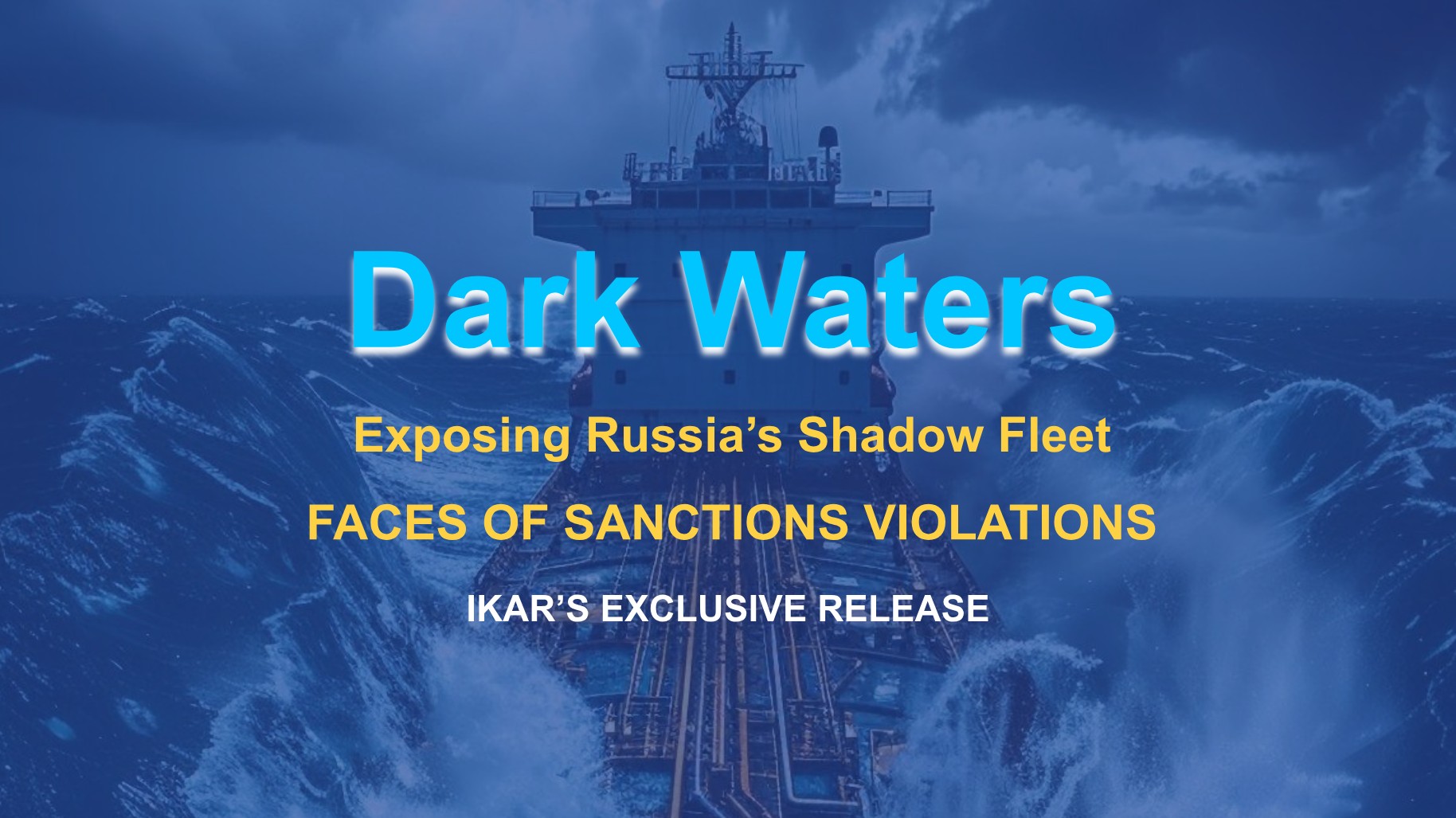
The Institute for Conflict Studies and Analysis of Russia, using a variety of methods to collect and analyze information in the field of maritime logistics and transportation, has begun an investigation into the activities of the Russian shadow fleet. Since Russia’s full-scale invasion of Ukraine began in 2022, the shadow fleet has become an important tool for circumventing international sanctions. A network of aging oil tankers, poorly monitored and regulated, often uninsured and sailing under false or unknown flags, generates tens of billions of dollars in additional revenue for Russia each year, which it spends on military aggression.

The focus of our analysis is to expose and deanonymize the direct participants in the circumvention of sanctions, since these people are deliberately involved in schemes that directly finance Russia’s illegal and aggressive war against Ukraine and its preparation for military aggression against other European countries.

Such investigations and further personal accountability for these individuals should demonstrate that assisting in Russian military aggression will inevitably have its consequences. Another key point of our research is the uncovering of sanctions-busting infrastructure directly within EU countries and the facilitation of equally serious consequences for those individuals who provide it while physically located within their territory.

This presentation reveals the first part of the results. We have established a direct link between two important figures, Captains Ivan Nikiforov and Alexander Kolesnikov, who are involved in the logistics supporting the Russian military machine. This previously unpublished information exposes specific individuals helping the Kremlin evade sanctions and facilitate the profitable exploitation of the conflict by disguising their activities behind anonymous tankers owned by shadowy entities.

The Institute for Conflict Studies and Analysis of Russia continues its systematic work to identify individuals and legal entities who bear a large share of responsibility for the Russian Federation’s ability to continue to commit war crimes and prepare to commit new ones.
Related publications

Election and Post Election Day in Armenia: Russian information influence and framing
Analytics

Election and Post Election Day in Armenia: Russian information influence and framing

Executive Summary On the day of Armenia’s parliamentary elections, debate focused on two core issues: the legitimacy of the government and the country’s sovereignty in shaping its future. Prime Minister Nikol Pashinyan and his government emphasized anti-corruption measures, efforts to prevent vote-buying, and tighter oversight of the electoral process. They also framed the election as…

Election and Post Election Day in Armenia: Russian information influence and framing
Russian FIMI in the Armenian Elections
Analytics

Russian FIMI in the Armenian Elections

Overview of Recent Trends Ahead of Armenia’s parliamentary elections, the information environment surrounding the country shows signs of an intensifying and increasingly sophisticated Russian influence campaign. This campaign extends beyond traditional information and propaganda tools, encompassing a broader combination of media, economic, political, and institutional pressure. For Moscow, these elections are significant not only as…

Russian FIMI in the Armenian Elections
Russian Influence on the 2026 Elections in Armenia: Main Approaches and Risks
Analytics

Russian Influence on the 2026 Elections in Armenia: Main Approaches and Risks

Executive Summary The parliamentary elections in Armenia, scheduled for June 7, 2026, are becoming another testing ground for Russia to apply its influence instruments previously deployed during the elections in Georgia and Moldova in 2024–2025. The core elements of this strategy include the exploitation of fear of war, the promotion of frozen conflict narratives, particularly…

Russian Influence on the 2026 Elections in Armenia: Main Approaches and Risks
System of Sanctions Evasion: IKAR’s Investigation
Analytics

System of Sanctions Evasion: IKAR’s Investigation

From “Shadow” to “State”: The True Nature of Russia’s Maritime Sanctions Evasion System The IKAR investigation series sequel demonstrates that the “shadow fleet” is not an incidental or unintended byproduct of sanctions policy. Rather, it constitutes a deliberate, integrated element of Russia’s state economic and security strategy. Its operations systematically undermine the effectiveness of the…

System of Sanctions Evasion: IKAR’s Investigation