Summary
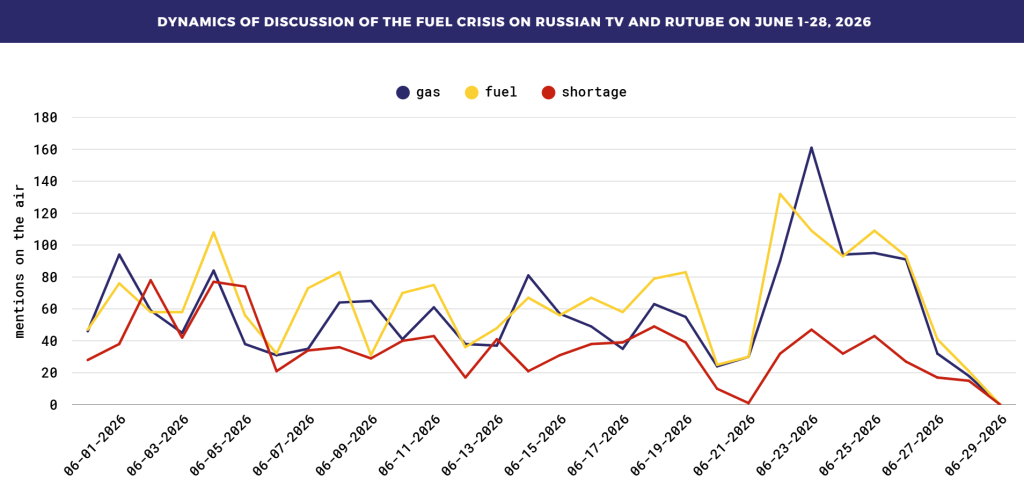
Monitoring of Russian sources for the period 15–29 June 2026 shows that the fuel shortage is emerging as a new stage in a broader campaign of pressure on Russia’s rear. Fuel disruptions are increasingly shifting the consequences of the war from the realm of abstract political developments into everyday life. Isolated shortages are gradually replaced by a regime of administratively managed distribution: queues, fuel rationing limits, QR codes, bans on fuel canisters, rising prices, and growing dependence on operational headquarters’ decisions are shaping a new model of daily experience.
At the center of these developments is the question of how well the state is able to govern under pressure. Fuel availability is becoming an important sign of whether basic economic activity and everyday life can keep functioning despite ongoing strain on infrastructure and logistics. Restrictions are appearing across different regions—from Crimea and the south to the Moscow region and the northwest—gradually changing how people perceive the war. It is increasingly seen less as something confined to the front line and more as something that affects movement, access to resources, and supply chains in daily life.
One of the defining features of this period is how panic-driven demand has turned into a crisis factor in its own right. Mass stockpiling of fuel, the growth of grey markets, and clashes at gas stations point to weakening trust in official information and a stronger reliance on personal experience, rumors, and regional reports. Efforts by authorities to limit panic through rationing and administrative bans also highlight how unusual the situation is, which in turn reinforces public anxiety.
At the same time, the state is trying to manage not only fuel distribution but also how the crisis is perceived. Limits on photography and video, labeling reports as “fake” or “information operations,” focus on “speculators” and “panic-mongers,” and discussions about tighter VPN controls all suggest that the information space is being treated as a separate area of crisis management. In this framing, responsibility for disruptions is shifted away from systemic problems and toward external threats and individual behavior.
Under these conditions, fuel shortages are becoming not just a test of transport and energy systems, but also of governance effectiveness. As restrictions spread, the state’s ability to ensure basic supplies takes on independent political importance and becomes a key measure of how resilient the overall system is.
From the Destruction of the “Safe Rear” to Governability Crisis
Monitoring of Russian sources from 15–29 June 2026 shows that fuel shortages have become a direct continuation of a broader campaign of pressure on Russia’s rear areas. If earlier the main result of this campaign was the gradual erosion of the idea of a “safe rear,” the second half of June marks a shift to a new phase—administratively managed shortages. Instead of isolated disruptions, a system of tightly controlled distribution is emerging, along with special rules for consumption. The war is increasingly reflected in everyday life: queues at filling stations, fuel rationing, QR codes, bans on fuel canisters, rising prices, transport disruptions, and a growing enforcement presence.
The key issue is now the state’s ability to manage scarce resources. For the population, the problem is not only shortages themselves, but also how authorities set priorities, impose restrictions, and explain what is happening. In this sense, gasoline and diesel are no longer just economic goods—they have become practical indicators of how effectively the state is functioning under sustained pressure on transport and energy systems.
The monitoring also shows restrictions appearing across different parts of the country: occupied territories, southern logistics hubs, the Moscow region, and the northwest. The nature of disruptions varies. In some areas, dependence on logistics is the main factor. In others, the spillover of the war into the political and economic center is more visible. Elsewhere, disruptions along key transport and tourism routes dominate. Together, these developments are reshaping how the war is perceived: less as a localized military conflict, and more as sustained pressure on infrastructure, mobility, logistics, and access to essential goods.
As a result, the fuel crisis is becoming significant far beyond the energy sector. It is increasingly an indicator of state resilience, where the ability to ensure access to basic resources becomes a core measure of whether social stability can be maintained under prolonged wartime conditions.
Panic as an Independent Crisis Driver
Monitoring shows that in the second half of June, panic-driven demand becomes an independent factor destabilizing the fuel market. Large-scale purchases of fuel in canisters and storage containers, attempts to build personal reserves, resale at inflated prices, expansion of the grey market, and clashes at gas stations all point to weakening trust in official assessments. Increasingly, decisions are based not on public statements but on expectations of further deterioration. As a result, shortages exist both as a material condition and as a social expectation that reinforces them.
This pattern is typical of crises in which official communication no longer has a monopoly over interpretation. Large-scale stockpiling reflects doubts about supply stability and shows the growing influence of personal experience, rumors, and regional reporting. As these behaviors spread, the information environment begins to reproduce crisis expectations on its own, increasing pressure on the supply system.
Authorities, meanwhile, face a contradiction. Official messaging urges the public not to panic and stresses that disruptions are temporary. At the same time, fuel rationing, purchase limits, and other administrative measures are introduced. These steps are often read as indirect confirmation of the severity of the situation. Each new restriction therefore reduces immediate pressure on distribution but also strengthens the perception that the crisis is exceptional.
Information Dimension and the Narrative of Control
Alongside regulating fuel distribution, Russian authorities are also trying to shape how the crisis is perceived. Bans on photographing fuel tankers and queues at gas stations, the labeling of reports on shortages as “leaks” or “information operations,” accusations against media and bloggers, and discussions of tighter VPN restrictions all suggest that the information space is being treated as a separate domain of crisis management.
At the same time, the visual evidence of shortages—queues at gas stations, empty pumps, fuel tankers under guard, QR-based distribution systems, and the visible presence of security forces—requires little interpretation. It produces a direct image of abnormal conditions that can shape public perception more strongly than official statements. In this context, controlling the spread of such imagery becomes part of broader crisis communication strategy.
Official messaging, however, remains largely unchanged. The shortages are described as temporary and localized, attributed to seasonal demand, maintenance work, logistical disruptions, and the impact of Ukrainian strikes on infrastructure. The state also emphasizes its response: emergency meetings, operational headquarters, rationing systems, QR-based controls, and increased security presence. The aim is to project control, attribute disruptions to external causes, and limit public concern.
Yet as restrictive measures expand, the internal contradiction in this approach becomes more visible. Tools meant to demonstrate effective governance increasingly function as signals of crisis. QR codes, fuel canister bans, heightened security presence, emergency protocols, and tighter control mechanisms do not restore a sense of normality; instead, they reinforce the perception that the situation is exceptional.
Searching for Scapegoats and Discontent Reprocessing
Monitoring shows that the Russian information system consistently prevents everyday dissatisfaction from turning into direct criticism of the war itself. Instead, emerging frustration is redirected into a narrative of external threat and the need for countermeasures. Worsening living conditions—including queues and various restrictions—are attributed to Ukrainian strikes on oil refineries, terminals, power lines, and other infrastructure. This framing channels public discontent outward and reduces the likelihood that it will be directed at state institutions.
At the same time, attention is focused on internal culprits. Public discourse increasingly targets speculators, resellers, panic-mongers, and those spreading “fake” information, who are portrayed as responsible for shortages and rising anxiety. This shifts focus away from structural causes toward individual behavior, while also legitimizing expanded administrative and security control.
As a result, everyday practices such as queuing at gas stations, buying fuel, or posting images of fuel tankers gradually take on a political dimension. They are increasingly seen not only as routine actions, but also as potential risks to information security that require state oversight.
Federal Recognition of the Crisis and the Limits of Control Rhetoric
The culmination of the period is the elevation of fuel issues to the federal level. Meetings involving senior leadership, discussions of fuel imports, possible diesel export restrictions, adjustments to exchange mechanisms, and efforts to maximize refinery output all indicate that the crisis is being treated as a nationwide issue requiring centralized intervention.
At the same time, official rhetoric remains largely unchanged. The shortage is described as temporary, reserves as sufficient, and supply recovery as proceeding according to plan. Yet the scale of emergency measures sits uneasily with these claims. If the situation were truly localized and under control, such interventions would not be necessary. If they are necessary, then statements about limited severity risk being perceived as reassurance rather than accurate description.
This contradiction does not automatically lead to a loss of trust in institutions. However, each new episode involving queues, restrictions, administrative controls, and emergency measures expands the space for doubt. Over time, lived experience begins to compete with official explanations.
Ultimately, the fuel crisis extends beyond an infrastructure issue. It becomes a test of the state’s ability to maintain basic supply systems under prolonged wartime conditions. As administrative controls and official messaging intensify, they increasingly function as compensatory mechanisms aimed at preserving the perception of manageability—even as material signs of strain become more visible.
Drone Campaign and a New Vulnerability Map
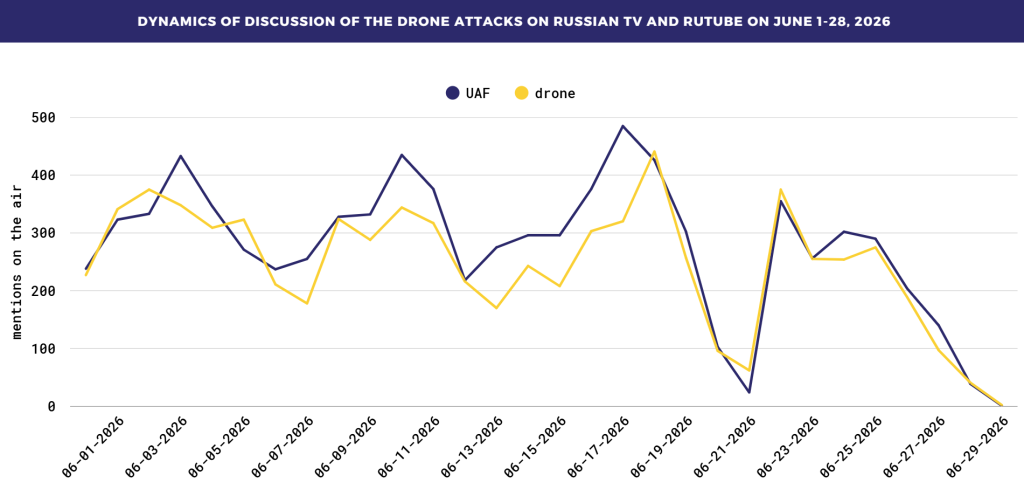
Monitoring of the second half of June shows that the ongoing wave of strikes on oil refineries and related infrastructure is reshaping Russia’s internal map of vulnerability. The key points of this map now include not only areas near active combat, but also energy, transport, and logistics hubs that support the functioning of the rear.
For the population, this results in a changed experience of the war. Its effects are no longer perceived only through reports from the front, but through air defense activity, fires at energy facilities, fuel disruptions, rising prices, and restrictions on mobility. In this context, fuel shortages become the channel through which the consequences of strikes take on a mass, everyday dimension.
A key feature of this dynamic is the gap between physical damage and its psychological impact. The material consequences of individual strikes can often be repaired relatively quickly, but expectations of further disruptions persist much longer. The repeated nature of strikes and related restrictions gradually reinforces a sense that the war is permanently present in daily life. Over time, it becomes harder to perceive the conflict as geographically distant or to maintain the impression of full systemic control.
Conclusions
Monitoring of Russian sources for 15–29 June 2026 shows that the fuel shortage marks a new stage in pressure on Russia’s rear areas. If earlier the war’s effects were expressed mainly through the erosion of the idea of a “safe rear,” the second half of June is characterized by the emergence of administratively regulated restrictions that directly shape everyday life. Queues, fuel rationing limits, QR codes, bans on fuel canisters, rising prices, and an increased security presence all become part of a new everyday experience of the war.
The crisis reveals several interconnected layers of vulnerability—logistical, administrative, social, and symbolic. Access to basic resources is increasingly determined not by market mechanisms but by administrative decisions, while the effects of strikes on infrastructure extend far beyond the directly affected regions. As a result, public perceptions of the war are shifting: it is increasingly associated not only with the front line, but also with constraints in daily life.
At the same time, the socio-psychological dimension of the crisis becomes more pronounced. Panic-driven demand emerges as an independent destabilizing factor, while personal experience plays a growing role in how the situation is assessed. As everyday constraints accumulate, official claims that the situation is under control are increasingly measured against lived reality, expanding the space for doubt without necessarily leading to open political criticism.
The Russian information system continues to contain the politicization of emerging discontent by attributing worsening conditions to external adversaries, speculators, and panic-driven behavior among the population. This framing still helps localize frustration and prevent it from turning into direct criticism of state policy. However, its effectiveness increasingly depends on the state’s ability to prevent further deterioration and restore stability to the supply system.
The central contradiction of this phase is that measures intended to demonstrate control simultaneously become the most visible markers of crisis. QR codes, rationing limits, expanded security involvement, bans on photographing and filming, emergency meetings, and discussions of fuel imports do not simply signal normal governance; they increasingly indicate a shift toward emergency management. In this sense, the fuel crisis is not only a consequence of strikes on infrastructure, but also a factor shaping perceptions of state capacity and the resilience of Russia’s domestic rear.