Executive Summary
Monitoring of the Russian information space during 8–14 June 2026 indicates a gradual increase in the war’s impact on the everyday lives of Russian citizens. A key driver of this process has been the systematic targeting of Russia’s fuel, energy, and logistics infrastructure, resulting in localized and regional fuel shortages, mobility restrictions, transportation disruptions, and increasing administrative control over resource distribution.
The most illustrative examples can be observed in the occupied Crimea, Sevastopol, and Russia’s southern regions, where fuel shortages have led to the introduction of wartime-style rationing measures, including fuel purchase limits, QR-code access systems, priority allocation for security services and municipal operators, and the emergence of informal distribution channels. These developments point to a gradual shift from market-based mechanisms toward crisis-driven administrative management and have become one of the most tangible manifestations of the war for the civilian population.
At the socio-psychological level, the image of a “safe rear” is steadily eroding. Whereas the war was previously perceived as a distant phenomenon confined to the frontline or occupied territories, its consequences are increasingly experienced through shortages, queues, air raid alerts, drone attacks, rising prices, and uncertainty regarding access to essential resources. As a result, public anxiety is growing, latent social frustration is accumulating, and demand for stability, predictability, and the normalization of everyday life is becoming more pronounced.
At the same time, Russia’s information system largely retains its ability to redirect public frustration away from the causes of the war and toward its consequences. Through narratives centered on “external aggression,” the “besieged fortress,” and alleged “Ukrainian terrorist attacks,” responsibility for deteriorating living conditions is shifted onto an external adversary rather than onto the political decision to continue the war itself.
Pro-government military bloggers and propagandists play a particularly important role in this process. They increasingly rely on narratives of retaliation and revenge. Attacks on Russian infrastructure and territory are framed as justification for further escalation and for large-scale strikes against Ukrainian cities. In this way, personal losses and everyday inconveniences are integrated into a broader logic of mobilization and support for harsher state action.
Another important consequence of the expanding drone war is the transformation of how the conflict itself is perceived. In the public consciousness, the war is becoming less associated exclusively with combat operations on the frontline and increasingly linked to infrastructure protection, logistical resilience, air-defense effectiveness, and the state’s ability to guarantee security in rear regions. As a result, a new type of wartime experience is emerging, one in which the distinction between the front line and the rear is gradually blurred.
The principal conclusion of this assessment is that the war is steadily losing its status as a distant political event and is increasingly becoming a direct feature of everyday life for Russian citizens. This creates growing potential for hidden dissatisfaction, war fatigue, and a gradual erosion of public willingness to accept further mobilization. However, at the current stage, Russian propaganda mechanisms remain sufficiently effective to transform most negative consequences of the war into support for narratives of defense, retaliation, and the continued prosecution of the conflict.
Erosion of the “Safe Rear” Narrative
One of the most prominent trends emerging from the analyzed materials is the gradual erosion of the perception of the rear as a space insulated from the direct consequences of war. For an extended period, the Russian authorities maintained a public narrative in which military operations remained confined to distant territories, while the everyday lives of most citizens were expected to retain a sense of stability and predictability. However, the accumulation of economic, logistical, and resource-related disruptions is increasingly undermining this construct.
These developments are most clearly visible in Crimea, Sevastopol, Rostov Oblast, and several other regions, where shortages of gasoline and diesel fuel have been accompanied by long queues at filling stations, restrictions on fuel sales, and the prioritization of supplies for security agencies, municipal services, and public transportation. Public reporting increasingly references the use of QR codes, fuel vouchers, and other access-control mechanisms, effectively indicating a shift toward administrative allocation of a critical resource.
For a significant share of the population, such measures represent their first direct experience of wartime resource rationing within Russia itself. Whereas the consequences of the war had previously been perceived primarily through media coverage or official rhetoric, they are now taking on tangible everyday forms that citizens encounter on a daily basis. As a result, the war is becoming less associated exclusively with events on the battlefield and increasingly linked to personal restrictions affecting mobility, consumption patterns, and overall perceptions of social and economic stability.
In practical terms, this is reflected in the inability to refuel vehicles in a timely manner, difficulties in planning travel, disruptions to transportation infrastructure, and growing uncertainty regarding future access to essential services. Simultaneously, citizens are becoming increasingly aware of their dependence on administrative decisions, as authorities play a growing role in determining access to scarce resources and setting priorities for their distribution.
Particularly significant is the fact that these developments are no longer confined to border regions or areas in close proximity to active combat zones. Signs of resource constraints and logistical disruptions are increasingly being reported in major cities and deep-rear regions of the country. As a result, one of the key informal social contracts underpinning the resilience of the Putin system is being gradually weakened—the promise of relative socio-economic stability and the insulation of the broader population from the direct consequences of war.
The more deeply the war penetrates the everyday experiences of ordinary citizens, the more difficult it becomes to sustain the perception of the conflict as localized, distant, and fully controllable. This process is gradually reshaping public perceptions of both the current situation and the prospects for its future development.
Anxiety, Scarcity, and Crisis Behavior
A second important trend identified in the analyzed materials is the rise in social anxiety and the spread of crisis-driven behavioral patterns among the population. Unlike the direct material effects of shortages, which may be localized or temporary, the psychological consequences of resource scarcity tend to be broader in scope and longer-lasting. It is these effects that foster an atmosphere of uncertainty which gradually extends beyond individual economic disruptions and begins to shape broader public perceptions of the situation.
Typical manifestations of this process include long queues at filling stations, panic purchasing of fuel, efforts to accumulate additional reserves, the growth of speculative resale at inflated prices, and the proliferation of informal mechanisms for accessing scarce resources. Such behavior represents a classic societal response to increasing uncertainty and signals a gradual decline in public confidence in the ability of state institutions to ensure the stable functioning of the economy and everyday life.
At the same time, the primary driver of public concern is not the shortage itself, but rather the erosion of predictability. For Russian society, which remains strongly oriented toward values of stability, social order, and guaranteed access to basic goods and services, uncertainty has become a particularly significant source of psychological discomfort. Under such conditions, even relatively limited supply disruptions can be interpreted as evidence of deeper systemic problems, triggering reactions that are disproportionate to the actual scale of the shortage.
A further factor contributing to growing distrust is the increasingly visible gap between official rhetoric and citizens’ everyday experiences. On the one hand, state institutions continue to portray the situation as stable and under control, emphasizing the absence of serious risks for the population. On the other hand, citizens are confronted with queues, fuel purchase restrictions, refueling limits, and other forms of administrative rationing. This discrepancy between the official narrative and lived reality gradually undermines trust in government information sources and encourages the search for alternative channels of information.
In a broader context, these developments extend far beyond fuel supply issues alone. They contribute to a more generalized sense of instability and uncertainty regarding the country’s future trajectory. Whereas the war was previously perceived by many as a distant conflict posing relatively manageable risks to the broader population, an increasing number of citizens are now becoming aware of its direct impact on their personal welfare, economic opportunities, and quality of life.
As a result, localized manifestations of resource scarcity are gradually evolving into a broader social signal about the growing costs of the war for the civilian population, including in regions located far from active combat zones. This process does not necessarily translate into opposition to the war itself, but it does contribute to the accumulation of latent frustration, heightened sensitivity to further disruptions, and a growing public demand for the restoration of stability and predictability in everyday life.
Assessing the Authorities: Between the Demonstration of Control and a Crisis of Trust
Another important trend evident in the analyzed materials is the gradual transformation of public perceptions of state authorities amid mounting resource shortages and logistical disruptions. The information environment suggests that the traditional image of the state as a guarantor of stability is increasingly being challenged by the need to respond to the consequences of a war whose effects are becoming visible in everyday life.
The federal government continues to consistently promote a narrative of control, emphasizing economic resilience, the effectiveness of state governance, and the system’s ability to respond rapidly to emerging challenges. At the same time, regional authorities are increasingly confronted with the practical consequences of attacks on critical infrastructure, supply chain disruptions, shortages of key resources, and growing public dissatisfaction. As a result, a widening gap is emerging between federal rhetoric, which stresses stability and resilience, and regional realities, which increasingly reflect the demands of crisis management.
For the population, this situation creates a contradictory image of the state. On the one hand, the authorities demonstrate a willingness to intervene in crisis situations through administrative regulation, centralized control over resource allocation, and emergency response measures. These include fuel rationing, QR-code access systems, priority supply schemes for selected categories of consumers, and other extraordinary measures designed to reinforce perceptions of order and state capacity under conditions of growing pressure.
On the other hand, the very introduction of such mechanisms inevitably draws attention to the scale of the problems they are intended to address. For many citizens, the need for administrative rationing serves as indirect evidence that conventional market and governance mechanisms are no longer sufficient to ensure the stable functioning of the system. Consequently, measures intended to demonstrate control may simultaneously deepen public awareness of the severity of existing challenges.
Public sensitivity is particularly acute when official statements denying shortages or asserting that the situation remains fully under control coincide with the introduction of visible restrictions on access to resources. Such discrepancies between official narratives and lived reality create the impression that state institutions are more concerned with maintaining informational stability than with openly acknowledging and addressing the root causes of the crisis. Over the longer term, this dynamic poses additional risks to public trust in official sources of information and government communications more broadly.
At the current stage, public dissatisfaction remains largely localized at lower levels of governance. Regional officials, fuel station operators, resource suppliers, and logistics providers tend to become the primary targets of criticism because they are most directly associated with the everyday difficulties experienced by citizens. This mechanism serves, at least in part, as a political buffer, allowing local administrative failures to be separated from broader evaluations of the federal leadership.
However, the accumulation of such crisis episodes gradually expands the space for more fundamental questioning of the effectiveness of state institutions. The more frequently citizens encounter shortages, restrictions, and new forms of administrative control, the more difficult it becomes to sustain perceptions of complete state control over the situation. In this context, individual resource and logistical disruptions acquire broader political significance, evolving into factors that influence public confidence in the system of governance itself and in its ability to deliver the stability and predictability that have long served as central pillars of political legitimacy.
Propaganda Reframing of Public Discontent and the Narrative of Retaliation
A third key trend is the systematic transformation of everyday frustration and social anxiety into support for the continued prosecution of the war. Analysis of the information environment suggests that the Russian authorities and affiliated information actors are actively working to prevent the emergence of a direct causal link between domestic hardships and the political decision to wage war. Instead, society is offered an alternative interpretive framework in which the source of these difficulties is not the war itself, but the actions of an external adversary.
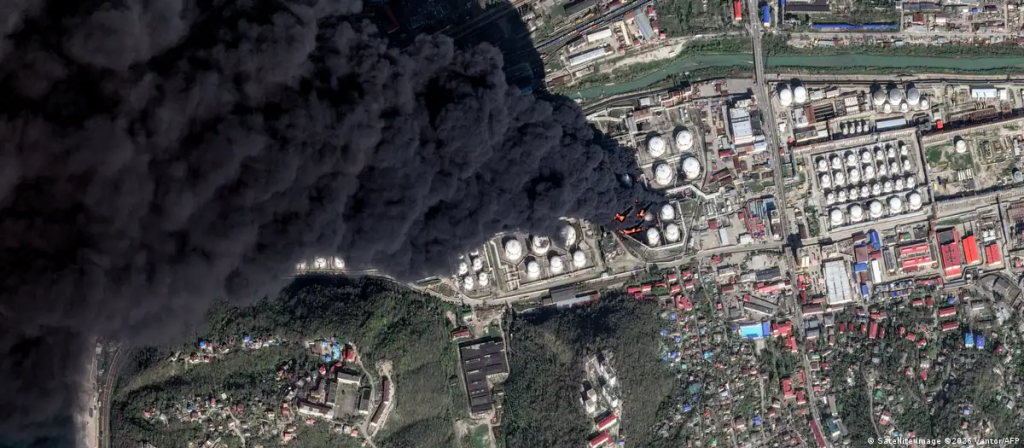
Within this framework, fuel shortages, infrastructure disruptions, transportation difficulties, and other negative consequences are increasingly portrayed not as the predictable outcome of a prolonged military conflict, but as the result of deliberate actions by Ukraine. Strikes against oil refineries, fuel depots, energy facilities, and logistical hubs are framed through the narrative of “terrorist attacks” against Russia’s civilian population. This approach enables responsibility for worsening socio-economic conditions to be externalized beyond the Russian political system and transferred onto the image of an external enemy.
In practice, this constitutes a process of political redirection of public dissatisfaction. Rather than associating growing shortages, restrictions, and risks with the war itself and the ongoing mobilization of national resources, citizens are encouraged to interpret them as consequences of external aggression against Russia. As a result, public attention is focused not on the underlying causes of emerging problems, but on the perceived necessity of responding to their manifestations.
A particularly significant role in this process is played by military bloggers, pro-government commentators, and actors operating within Russia’s informal propaganda ecosystem. These voices increasingly rely on narratives of retaliation, punishment, and historical justice to emotionally frame the consequences of attacks on Russian territory. Following strikes on infrastructure facilities or individual regions, large-scale attacks against Ukrainian cities are presented not as another stage of military escalation, but as an inevitable and justified response to the actions of the adversary.
Within this communication model, a simplified causal chain is constructed: “Ukraine attacks Russian civilians; therefore, Russia must respond with greater force.” This narrative serves an important political function because it allows accumulated public frustration to be converted into support for escalatory policies. Negative emotions that might otherwise be directed toward criticism of government decisions or broader reflection on the consequences of the war are instead redirected toward support for coercive measures and demands for a harsher response.
At the same time, this mechanism performs a broader socio-psychological function. It provides a coherent explanatory framework through which personal losses, everyday inconveniences, and growing restrictions can be understood and rationalized. Under this logic, any hardship is interpreted as the unavoidable price of resisting an external threat. Consequently, resource shortages, transportation problems, and other manifestations of the war cease to be viewed as consequences of state policy and instead become framed as a collective ordeal imposed by an external enemy.
This dynamic helps explain why the growing penetration of war into everyday life does not automatically translate into stronger anti-war sentiment. Where effective mechanisms of information management and emotional mobilization remain in place, public dissatisfaction can be not only neutralized but actively transformed into an additional source of support for the continuation of the conflict. In this way, the experience of hardship itself becomes a tool for legitimizing further resource mobilization, military escalation, and the expansion of state coercive practices.
Drone Warfare as a New Model of Conflict Perception
Of particular significance in the current environment is the emergence of a new model of public perception of war centered on the phenomenon of so-called “drone warfare.” Analysis of the information space indicates that unmanned aerial attacks are increasingly shaping the everyday experience of civilian interaction with the conflict, transforming both perceptions of security threats and the broader framework through which war itself is understood.
Unlike traditional conceptions of the frontline as a clearly defined zone of military engagement, contemporary warfare is increasingly characterized by geographically dispersed confrontation. The geography of attacks extends far beyond border regions and now includes areas that were long regarded as relatively safe and distant from active combat. Reports of strikes and attack warnings are regularly emerging from Moscow and the Moscow region, as well as from Tatarstan, Yaroslavl, Samara, Nizhny Novgorod, and other regions. As a result, the psychological distance between the front line and the rear is gradually eroding, undermining one of the key foundations of how the war has been perceived by Russian society.
For a growing number of Russian citizens, the war is no longer associated exclusively with battlefield reports, accounts of offensive and defensive operations, or official military rhetoric. Instead, it is increasingly experienced through more tangible and routine manifestations, including air raid alerts, the operation of air-defense systems, temporary airport closures, disruptions to transportation networks, risks of damage to critical infrastructure, and the constant anticipation of future attacks. In this way, the war is becoming more deeply embedded in the everyday lives of the population, evolving into a persistent element of the country’s informational and social environment.
An important consequence of this process is the transformation of the very logic through which the conflict is interpreted. Whereas earlier stages of the war were largely understood through heroic, patriotic, and ideological narratives, public attention is increasingly shifting toward questions of technological effectiveness and security. Public discussions are placing greater emphasis on the capabilities of unmanned systems, the effectiveness of air-defense networks, the protection of critical infrastructure, the resilience of logistical routes, and the state’s ability to ensure the uninterrupted functioning of key sectors of the economy.
In practice, the war is increasingly perceived not merely as a clash between military forces on the battlefield, but as a broader contest between systems of logistics, technology, and infrastructure. Public attention is gradually shifting away from territorial control and toward control of airspace, transportation corridors, energy facilities, industrial assets, and supply networks. The ability to protect—or, conversely, to disrupt—such systems is increasingly viewed as a key indicator of military effectiveness and strategic success.
Over the longer term, these developments contribute to the emergence of a new type of wartime experience in which the distinction between the front line and the rear becomes increasingly blurred, while perceptions of vulnerability extend across large parts of the country. War comes to be understood as a persistent condition of risk affecting infrastructure, communications, transportation systems, and the routine functioning of society. Under these circumstances, the security of critical infrastructure, the resilience of logistical systems, and the effectiveness of technological defenses increasingly shape not only the practical realities of the conflict but also its psychological perception among the population.
Searching for Culprits and Support for Repressive Practices
Another characteristic trend accompanying the growing impact of war on everyday life is the increasing public demand for control, discipline, and punishment of those perceived as responsible for or contributing to emerging crises. Rising anxiety, uncertainty, and resource shortages create fertile ground for simple explanations of complex problems and for the personalization of responsibility for their emergence.
In the public discourse, images of “speculators,” “panic spreaders,” “fraudsters,” “dishonest entrepreneurs,” and other social groups are appearing with increasing frequency as those allegedly responsible for the deterioration of the situation. Within this framework, shortages, rising prices, and difficulties in accessing resources are explained not so much by the structural consequences of war, sanctions pressure, or the overloading of logistical systems, but rather by the actions of individuals who are portrayed as seeking to profit from the crisis or deliberately provoking social instability.
This approach performs an important political and psychological function. It allows public attention to be shifted away from the systemic causes of emerging problems and redirected toward the struggle against specific offenders, whose image is more understandable and emotionally compelling for a mass audience. As a result, social frustration acquires a clearly identifiable target, reducing the likelihood that it will evolve into criticism of broader political decisions or governance failures.
Under these conditions, law enforcement agencies, security structures, and regulatory institutions increasingly present themselves as guarantors of order and defenders of the public interest. Enhanced inspections, administrative restrictions, tighter control over the distribution of resources, and punitive measures against selected categories of offenders are portrayed as necessary tools for stabilizing the situation and protecting society from the consequences of the crisis. Consequently, measures that under different circumstances might provoke public resistance are often perceived during periods of heightened anxiety as justified and even necessary.
A notable feature of this process is that the expansion of control and repressive practices is increasingly legitimized not through political or ideological arguments, but through pragmatic appeals to maintaining order under wartime conditions. Administrative oversight is gradually becoming integrated into everyday life as a normal mechanism for responding to crisis situations, while its expansion is less frequently viewed as exceptional or temporary.
At the same time, the circle of potential targets for public suspicion continues to widen. Beyond economic actors accused of speculation or profiteering, attention is increasingly directed toward individuals allegedly spreading panic, disseminating “false information,” undermining public morale, or assisting the enemy in the information domain. Such narratives create additional justification for expanding monitoring mechanisms, information controls, and restrictions on public expression.
In the longer term, this dynamic creates favorable conditions for the further expansion of state control over society under the pretext of combating the consequences of war, ensuring resource security, and maintaining public order. The more deeply the war affects the daily experience of citizens, the easier it becomes to justify new mechanisms of surveillance, regulation, and administrative intervention. As a result, the normalization of wartime restrictions increasingly becomes part of the broader process of adapting society to a prolonged state of conflict, uncertainty, and resource pressure.
Conclusions
The analysis of the collected materials indicates a gradual shift from the distant perception of war to its direct and tangible experience by a growing share of the Russian population. Whereas the war previously existed primarily in the information space as a remote political and military process, its consequences are now increasingly manifested through resource shortages, air raid alerts, restrictions on mobility, disruptions to infrastructure, rising prices, logistical difficulties, and a growing awareness of the technological vulnerability of rear regions.
At the same time, the most significant socio-psychological change is rising anxiety, the accumulation of war fatigue, and a growing demand for a return to normality. For a substantial part of the population, the primary concern is gradually becoming not the political or ideological dimension of the conflict itself, but its impact on everyday stability, predictability, and personal security. It is precisely in this sphere that the war increasingly comes into conflict with the fundamental public expectations upon which the internal resilience of the Russian system has long depended.
At present, however, existing information and propaganda mechanisms continue to demonstrate an ability to adapt public dissatisfaction to the requirements of wartime mobilization. Through narratives centered on an external threat, the “besieged fortress,” the need for retaliation, and the fight against internal wrongdoers, the negative experiences of the population are largely integrated into the logic of continuing the war rather than questioning it. As a result, social frustration is often transformed not into anti-war attitudes but into support for harsher state actions and the further concentration of resources on the needs of the conflict.
The central contradiction of the current stage lies in the simultaneous development of two interconnected processes. On the one hand, the growing impact of war on everyday life is creating an expanding potential for latent dissatisfaction, disillusionment, and fatigue with a prolonged conflict. On the other hand, the effective redirection of this dissatisfaction toward external enemies, internal “speculators,” or localized administrative failures continues to prevent its direct transformation into criticism of the war itself.
The future trajectory of public sentiment in Russia will largely depend on the balance between these two trends: the rising social cost of war and the state’s ability to control the interpretation of its consequences. The deeper wartime disruptions become embedded in the everyday experience of citizens, the more difficult it will be to sustain the previous model of perceiving the conflict as distant and largely detached from daily life. At the same time, as long as the information system retains the capacity to channel accumulated frustration toward external or secondary targets, a significant portion of this discontent is likely to remain a resource not for delegitimizing the war, but for further reinforcing its social justification and political sustainability.