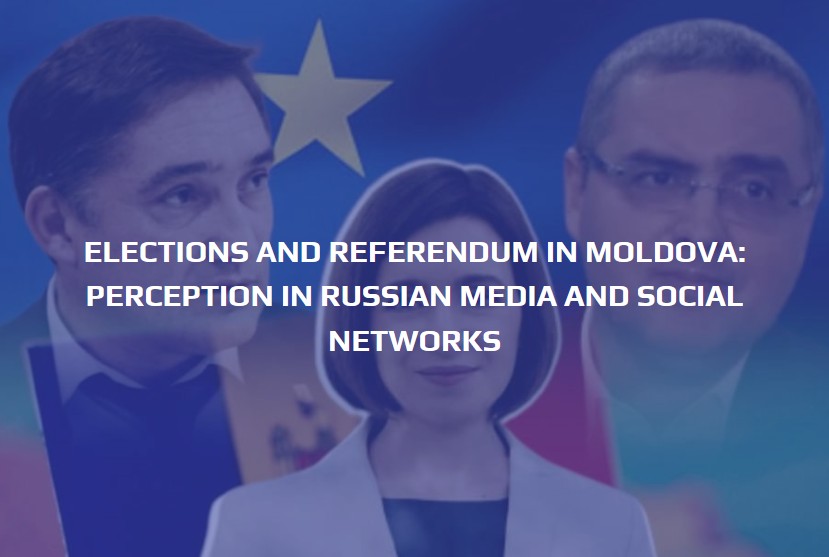
ELECTIONS AND REFERENDUM IN MOLDOVA: perception in Russian media and social networks

ELECTIONS AND REFERENDUM IN MOLDOVA: perception in Russian media and social networks

Since the official launch of the electoral campaign in Moldova in August 2024, Russian propaganda, media outlets, and social networks have engaged in extensive discussions concerning the elections. This is confirmed by the analysis of messages on Russian TV channels and video platforms, using the specialized AI-powered tool War of Words and AI-powered platform Osavul for comprehensive social media research.

Russian television has frequently featured presidential candidates, with a notable emphasis on Maia Sandu, compared to the opposition candidate, Alexander Stoianoglo, and other political figures. This heightened focus on Moldova’s pro-European president reflects a strategic effort to cultivate a negative perception of Maia Sandu within the Russian audience.

The discourse surrounding the Moldovan elections closely intersects with the Transnistria issue on propaganda channels and the RuTube platform. Notably, references to Transnistria during the pre-election campaign often exceeded those related to the elections themselves.

In addition to the discussions on TV channels, social networks in Russia became a place for vibrant discussions regarding the presidential elections and the referendum in Moldova. On the day of voting, Telegram messages about the Moldovan presidential elections garnered over 2 million views. The total view count for messages in the Russian segment of Telegram on October 20-21 surpassed 4.35 million, accompanied by more than 81 thousand reactions.

As noted in the propaganda broadcasts, conversations about Maia Sandu largely prevailed in the Russian Telegram space, significantly outnumbering discussions about Alexander Stoianoglo and other candidates.

Among the 482 sources that reported on the Moldovan elections during the voting and counting period, 150 Telegram channels demonstrated connections with Kremlin information campaigns and public opinion manipulation strategies aimed at influencing audiences.

Notably, the engagement of these compromised sources during the Moldovan election coverage was double the average involvement seen in other influence operations, which typically hovers around 15%. On election day, this engagement rate exceeded 31%.
Related publications

Election and Post Election Day in Armenia: Russian information influence and framing
Analytics

Election and Post Election Day in Armenia: Russian information influence and framing

Executive Summary On the day of Armenia’s parliamentary elections, debate focused on two core issues: the legitimacy of the government and the country’s sovereignty in shaping its future. Prime Minister Nikol Pashinyan and his government emphasized anti-corruption measures, efforts to prevent vote-buying, and tighter oversight of the electoral process. They also framed the election as…

Election and Post Election Day in Armenia: Russian information influence and framing
Russian FIMI in the Armenian Elections
Analytics

Russian FIMI in the Armenian Elections

Overview of Recent Trends Ahead of Armenia’s parliamentary elections, the information environment surrounding the country shows signs of an intensifying and increasingly sophisticated Russian influence campaign. This campaign extends beyond traditional information and propaganda tools, encompassing a broader combination of media, economic, political, and institutional pressure. For Moscow, these elections are significant not only as…

Russian FIMI in the Armenian Elections
Russian Influence on the 2026 Elections in Armenia: Main Approaches and Risks
Analytics

Russian Influence on the 2026 Elections in Armenia: Main Approaches and Risks

Executive Summary The parliamentary elections in Armenia, scheduled for June 7, 2026, are becoming another testing ground for Russia to apply its influence instruments previously deployed during the elections in Georgia and Moldova in 2024–2025. The core elements of this strategy include the exploitation of fear of war, the promotion of frozen conflict narratives, particularly…

Russian Influence on the 2026 Elections in Armenia: Main Approaches and Risks
System of Sanctions Evasion: IKAR’s Investigation
Analytics

System of Sanctions Evasion: IKAR’s Investigation

From “Shadow” to “State”: The True Nature of Russia’s Maritime Sanctions Evasion System The IKAR investigation series sequel demonstrates that the “shadow fleet” is not an incidental or unintended byproduct of sanctions policy. Rather, it constitutes a deliberate, integrated element of Russia’s state economic and security strategy. Its operations systematically undermine the effectiveness of the…

System of Sanctions Evasion: IKAR’s Investigation